
Search

Search

Suggestions

Outreach programs

Membership

Health workforce

Health services

Online training

Provide feedback

Queensland Mental Health Week

Who we are

CheckUP works with partner organisations and health providers to create healthier communities and reduce health inequities through a range of initiatives.

View all

Partner with us

There are so many ways you can support the work of CheckUP and our vision of better health for the people and communities that need it most.

View all

News & publications

Read the latest news and publications from CheckUP.

View all

Listening, Learning and Supporting Workforce Solutions Across Queensland

CheckUP’s Industry Workforce Advisors are Supporting Workforce Solutions Across Queensland

Throughout May for Queensland Small Business Month CheckUP’s Industry Workforce Advisors (IWAs) Carissa McAllister, Stuart Coward and Alina Khalid travelled across Queensland to participate in Queensland Small Business Month events and connected with business owners, community leaders and employers in the health and community service sectors. 

The Industry Workforce Advisors attended events spanning metropolitan, regional, rural and remote communities, and also with a strong focus on supporting the workforce of Aboriginal and Torres Strait Islander organisations and businesses. 

While every community is unique, common themes emerged wherever conversations took place. 
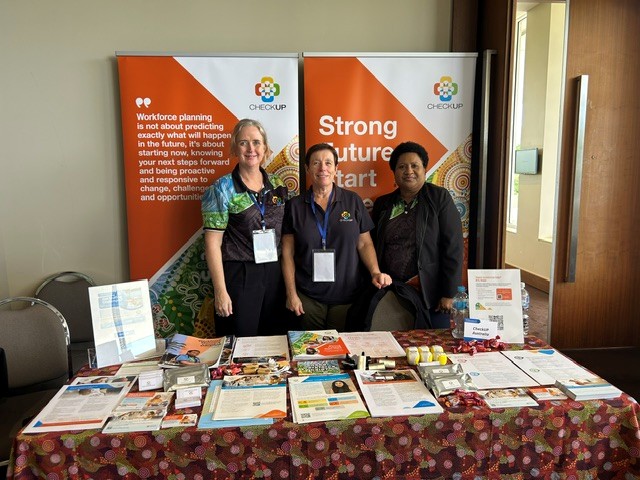
Employers consistently spoke about workforce shortages, challenges attracting and retaining staff, and increasing demand for services. Many small to medium-sized business owners described the growing pressure of balancing frontline service delivery with workforce and business management responsibilities, often with limited time and resources. For many Aboriginal and Torres Strait Islander organisations and businesses, these challenges are further compounded by geographic isolation, limited local workforce pools and difficulties accessing culturally responsive and meaningful workforce development supports. 

What stood out most was the immense energy of purpose and the willingness of businesses and organisations to share ideas and explore practical solutions. 

For GP practices and allied health businesses, the financial pressure is real. With Medicare indexed at 2.6% against CPI at 4.2% and mandatory wage increases of 4.75%, practices are absorbing the pressure, and that strain flows directly into the workforce. When non-clinical staff positions go unfilled, clinical staff absorb the load, and burnout follows. Across the broader health sector, the pattern is the same: Clinicians answering phones, allied health practitioners managing their own bookings, qualified professionals spending time on tasks a supported administration team could handle. One practical lever available right now is building that support workforce through vocational pathways helping businesses explore traineeships, entry-level roles to grow the non-clinical team that frees clinicians to do what they were trained to do and keep the business viable.  
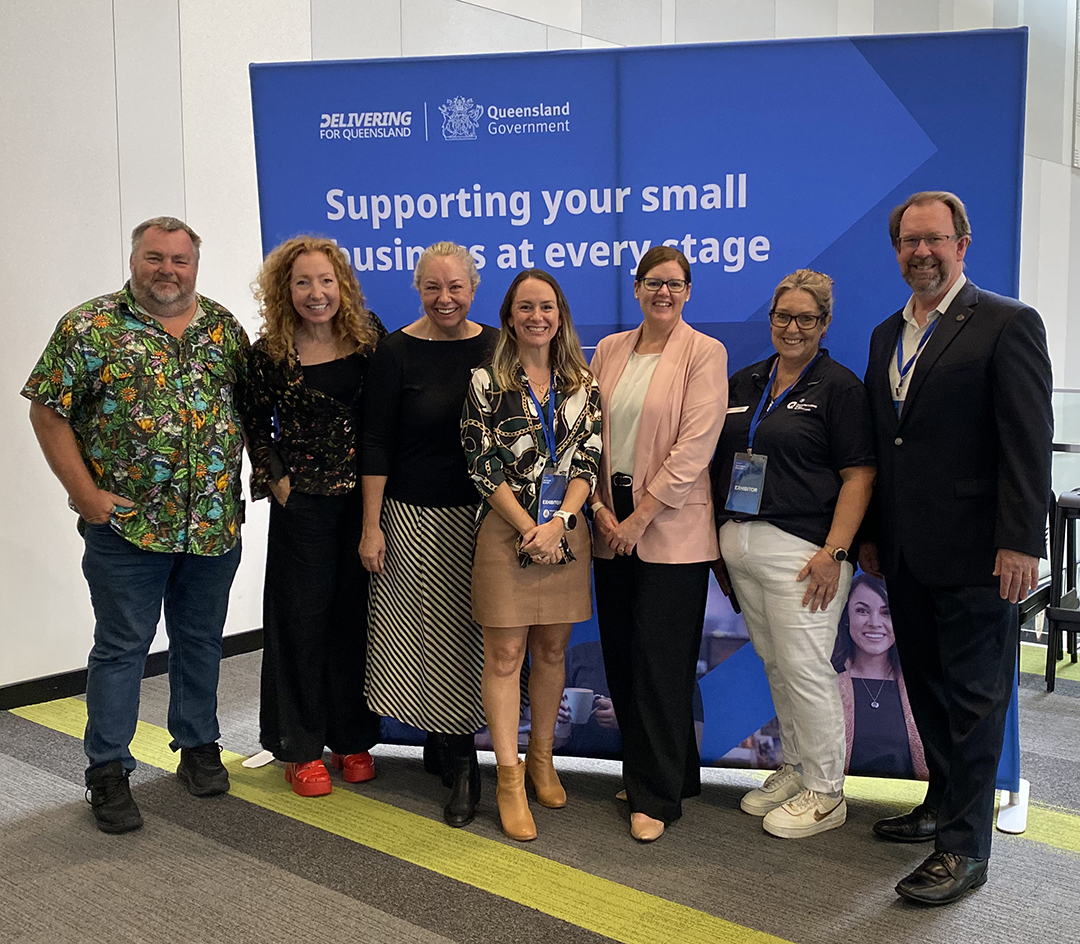
Businesses also expressed the value of personalised workforce advice. Many employers are aware that support programs and government initiatives exist but are unsure or overwhelmed where to start, or how opportunities apply to their unique circumstances. The IWA program helps bridge this gap by providing tailored workforce advice, supporting businesses to identify practical workforce actions, and connecting them with relevant government programs, funding opportunities and workforce initiatives. 

Another consistent message was the importance of place-based solutions. Communities emphasised that workforce challenges in rural and remote Queensland require locally informed responses developed in partnership with communities, employers, service providers and governments. Solutions that work in one location may not be suitable elsewhere, reinforcing the need for flexible approaches that recognise local strengths, priorities and aspirations. 

For CheckUP’s IWA team, these conversations reinforced the importance of listening first, building relationships and working alongside businesses and communities to identify practical workforce solutions. 

By understanding local challenges and opportunities, we can better support employers to strengthen their workforce, improve service delivery and create sustainable employment pathways for Aboriginal and Torres Strait Islander peoples across Queensland. 

The First Nations Industry Workforce Advisor Program is proudly funded and supported by the Queensland Government. 

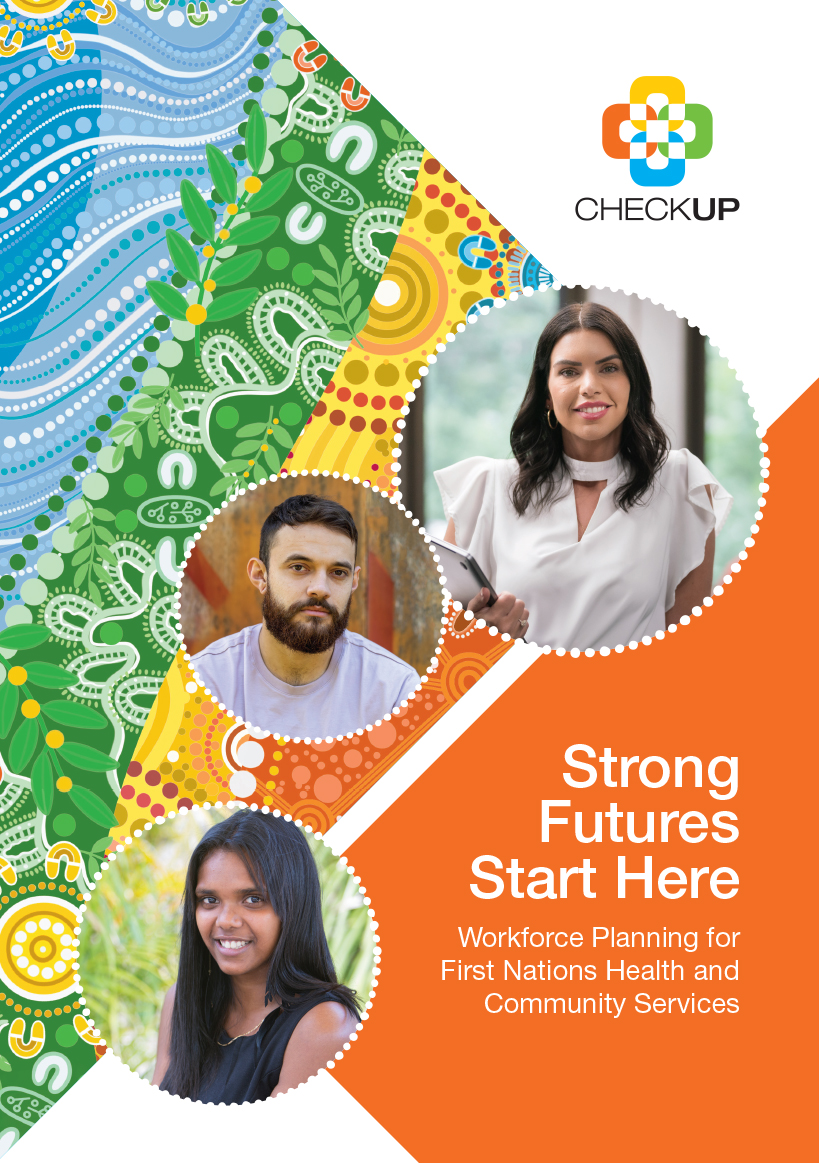
Download Strong Futures Start Here – How to start workforce planning for First Nations health and community services. 

To learn more about how CheckUP can support your workforce solutions visit the link below.

Learn more about Industry Workforce Advisors
Contact Carissa McAllister

First Nations Industry Workforce Advisor

Contact
Contact Stuart Coward

Community Services Industry Workforce Advisor

Contact
Contact Alina Khalid

Health Industry Workforce Advisor

Contact

Economic Strength starts with Strong Futures

By Carissa McAllister, First Nations Industry Workforce Advisor (Health and Social Assistance)

Workforce Planning builds the economic strength of First Nations Health and Community Services. For First Nations health and community services, economics is not about wealth. It is about thriving communities, centred by culture, families and the right to self-determination. The financial sustainability of a First Nations health or community service is inseparable from the strength, capability, and sustainability of its workforce.

Across rural and remote Queensland, we know First Nations health and community services operate in environments shaped by historical inequity, workforce shortages, and rising demand for care. On the surface, the challenges are financial: tight budgets, short-term funding cycles, recruitment pressures, compliance requirements, and increasing operational costs. Beneath these pressures, however, lies the deeper driver of sustainability: whether the service has the right people, in the right roles, with the right skills, supported in the right way to deliver culturally responsive, community-led care.

This is where workforce planning shifts from being a technical process to becoming a strategic lever for economic resilience. For First Nations health and community services, workforce planning is not simply about filling vacancies or forecasting shortages. It is about strengthening the foundations of services so they can remain stable, responsive and community-led in the face of changing demand and funding pressures.

Strong Futures Start Here

In response to these realities, CheckUP’s created the Strong Futures Start Here approach to workforce planning to recognise that thriving services begin with people. Stemming from and extending upon national and Queensland workforce, health and specific Aboriginal and Torres Strait Islander frameworks and strategies, the approach translates high-level policy into practical action. It provides a clear, accessible guide that enables services to begin workforce planning immediately with their teams, rather than waiting for external solutions and funding.

Strong Futures Start Here is designed to support organisations to assess their current workforce position, identify future risks and opportunities, and develop practical strategies that align workforce capability with community need. It moves workforce planning from a compliance requirement to a leadership practice embedded in everyday operations.

The Strong Futures Starts Here approach focuses on building workforce strength with empowered leadership, courageous communication and strong pathways for workforce development and transformation. It means creating environments where difficult conversations about sustainability, succession and service delivery can occur constructively. It also means investing in skills development, career pathways and culturally responsive workplaces that attract and retain local talent.

Empowered leadership, courageous communication and strong pathways

Empowered leadership is central to this work. When leaders move beyond reactive recruitment and focus on long-term vision with workforce capability, they can align workforce design with community priorities. In doing so, leaders balance financial stewardship with community and cultural responsibility.

Courageous communication strengthens impact. Open, facilitated dialogue enables teams and communities to discuss challenges honestly and build a path forward on a united journey to create opportunities. When these conversations occur in culturally responsive spaces, solutions reflect both operational realities and community expectations. Transparency reduces inefficiency and builds shared accountability.

Strong pathways are equally critical. Career progression, mentoring and leadership development create opportunities for local people to train, work and lead within their communities. This reduces workforce leakage to metropolitan areas and strengthens local economic participation, generating lasting social and economic benefit.

The financial dimensions of rural First Nations health and community services cannot be separated from workforce capability and cultural strength. Embedding workforce planning into organisational strategy strengthens retention, enhances productivity, reduces reactive spending, and improves service continuity. It is more than an operational tool, it is a pathway to economic resilience, cultural continuity, and long-term health equity.

Strong futures for First Nations health and community services are built on strong workforce foundations. By centring people, culture and community leadership, workforce planning underpins sustainable services and empowered communities.

More than an organisational tool, workforce planning strengthens economic sustainability, supports self-determination and keeps services resilient, culturally responsive and future-focused.

➡️  Visit the Strong Futures Starts Here web page


Download the workforce planning guide

CheckUP’s Health Industry Workforce Advisor brings workforce knowledge to the APNA Festival of Nursing

CheckUP’s Health Industry Workforce Advisor (IWA) Alina Khalid recently attended the 2025 APNA Festival of Nursing, joining nurses and health leaders from across Australia to explore the future of primary health care.

The conference showcased a range of innovative workforce models and tools including shared medical appointments, the use of AI to augment healthcare providers, team-based approaches such as GP–Aged Care Nurse coordination models. These sessions provided valuable insights into how different models can strengthen access to care, improve collaboration, and better support both patients and providers.

For CheckUP, being part of events like this ensures that our IWA program continues to bring up-to-date workforce knowledge, ideas, and innovations back to the practices and providers we work with every day. This means our clients benefit not only from direct workforce support but also from the latest thinking across Australia’s primary care sector.

The Industry Workforce Advisor program supports small to medium health and community services businesses to address workforce challenges, diversify their workforces, and support workforce and productivity growth. Find out more by selecting the button below.

Industry Workforce Advisors