CheckUP works with partner organisations and health providers to create healthier communities and reduce health inequities through a range of initiatives.
CheckUP works with partner organisations and health providers to create healthier communities and reduce health inequities through a range of initiatives.
You can’t build Northern Australia without building its workforce
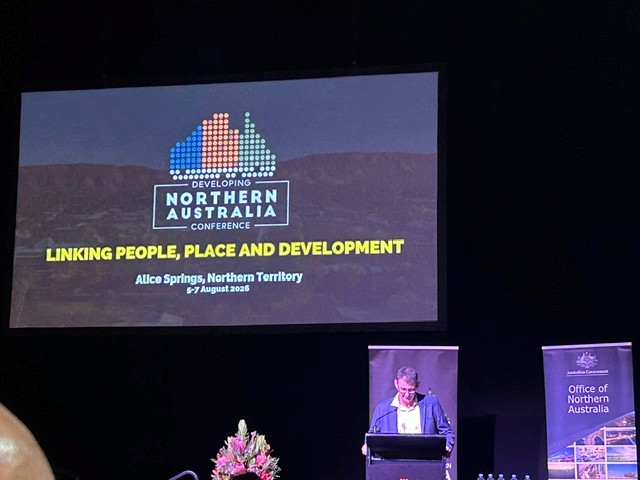
Reflections from Developing Northern Australia Conference (DNAC), Mparntwe (Alice Springs), 5–7 August 2026
By Carissa McAllister (left), First Nations Industry Workforce Advisor – Health and Social Assistance
What does it take to build a strong future for Northern Australia?
At DNAC in Mparntwe, the conversation centred on the opportunities and challenges shaping the future of the north,
from investment and infrastructure to regional development, industry, housing and community outcomes.
But underneath every one of these conversations sits a fundamental question: who will do the work?
This was the question I took to DNAC, where CheckUP presented on why and how Strong Futures Start Here was
developed, a practical workforce planning guide to help Aboriginal and Torres Strait Islander health and community
service organisations turn workforce challenges into action.
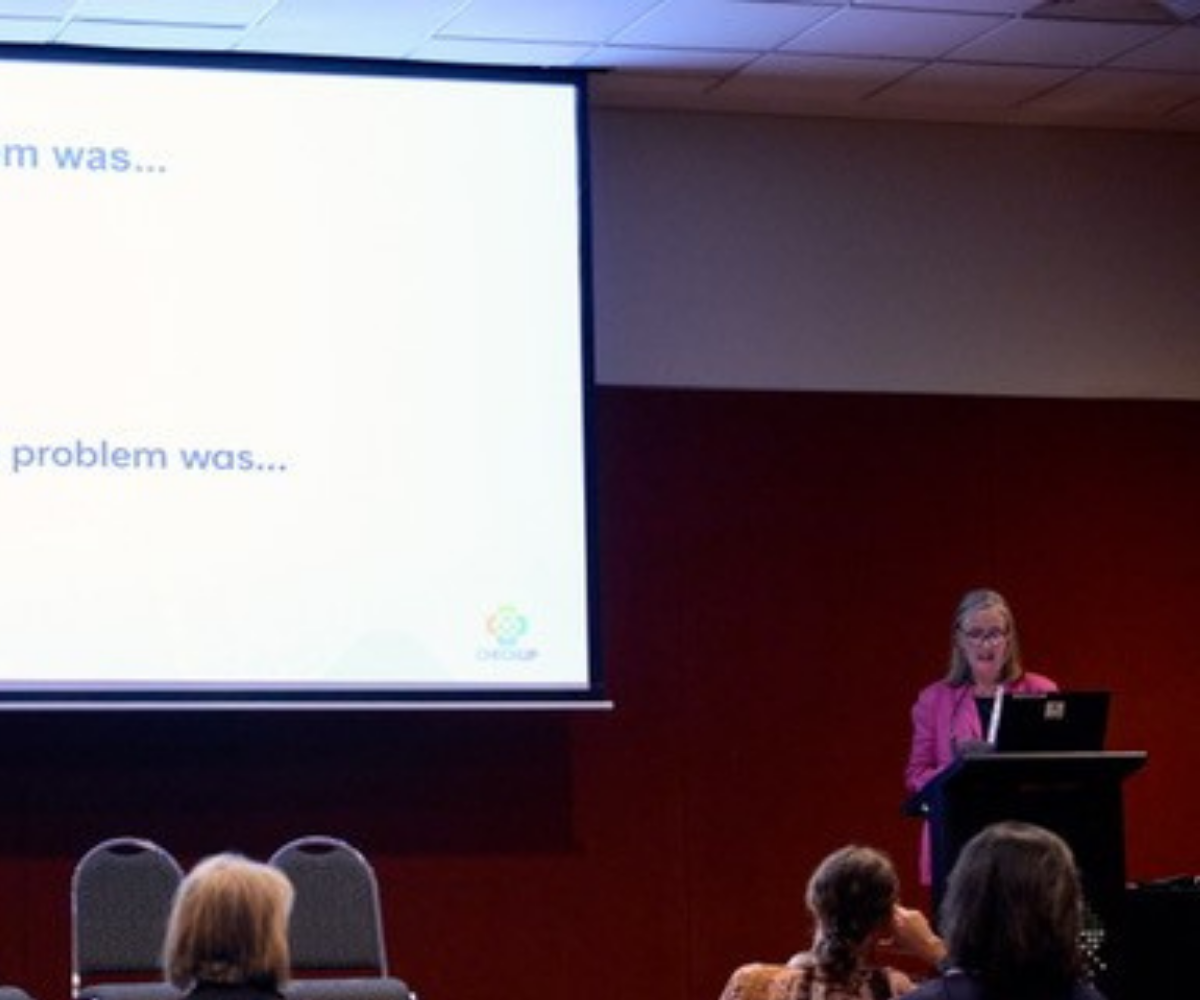
Carissa McAllister presenting at DNAC26.
Through my work as a First Nations Industry Workforce Advisor, I work alongside Aboriginal and Torres Strait
Islander businesses and organisations experiencing real workforce challenges. Often, organisations know they
have a workforce problem, but knowing there is a problem and knowing where to start are two very different
things. Strong Futures Start Here was developed to make workforce planning practical, accessible and
relevant to Aboriginal and Torres Strait Islander health and community services.
Workforce needs to be part of the development conversation
Northern Australia has enormous potential, but growth requires people with the right skills, in the right places,
at the right time. For Aboriginal and Torres Strait Islander communities, workforce planning is also about
creating meaningful pathways for local people to participate in and benefit from that growth. That means asking:
What workforce does our community need?
What skills will we need in the future?
How do we attract and retain the right people?
How do we build the capability of our existing workforce?
Where are our workforce gaps and risks?
What partnerships can help us build capacity?
Workforce planning cannot be something we consider once a project, service or funding opportunity is already
underway. It needs to be part of the planning from the beginning.
Why Strong Futures Start Here?
It provides a structured way to ask:
Where are we now?
Where are we going?
What workforce will we need?
What is getting in the way?
What do we need to do next?
Workforce planning is more than recruitment
One of the biggest shifts we need to make is moving beyond seeing workforce challenges simply as a recruitment
problem. When a position is vacant, the immediate response can be “we need to recruit.” Strategic workforce
planning asks what is sitting underneath that vacancy: are we attracting the right people, are we retaining the
people we have, do we have the right roles and skills, are we developing our existing workforce, and what will
our workforce need to look like in two or five years?
This shifts the conversation from:
“How do we fill this vacancy?”
to:
“How do we build the workforce our organisation and community need?”
A First Nations workforce lens matters
Workforce planning needs to reflect place, culture and community. What works in Brisbane may not work in a remote
community. What works for a large organisation may not work for a small Aboriginal and Torres Strait Islander
organisation. A First Nations workforce approach considers local pathways, participation, cultural capability,
community connections, workforce development, partnerships and the realities of attracting and retaining people
across regional, rural and remote communities.
These aren’t additional considerations. They are central to the strategy.
From planning to action
A workforce plan only creates value when it leads to action. Through CheckUP’s First Nations Industry Workforce
Advisor program, I am continuing to build a free and practical workforce development pathway.
01
FIND
Identify the workforce bottleneck.
02
PRIORITISE
Understand the pressure points and determine what matters most.
03
ACT
Turn priorities into a practical 90-day action plan.
04
PARTNER
Build the connections, capability and partnerships for sustainable workforce growth.
The four-step pathway CheckUP’s First Nations Industry Workforce Advisor program uses with organisations.
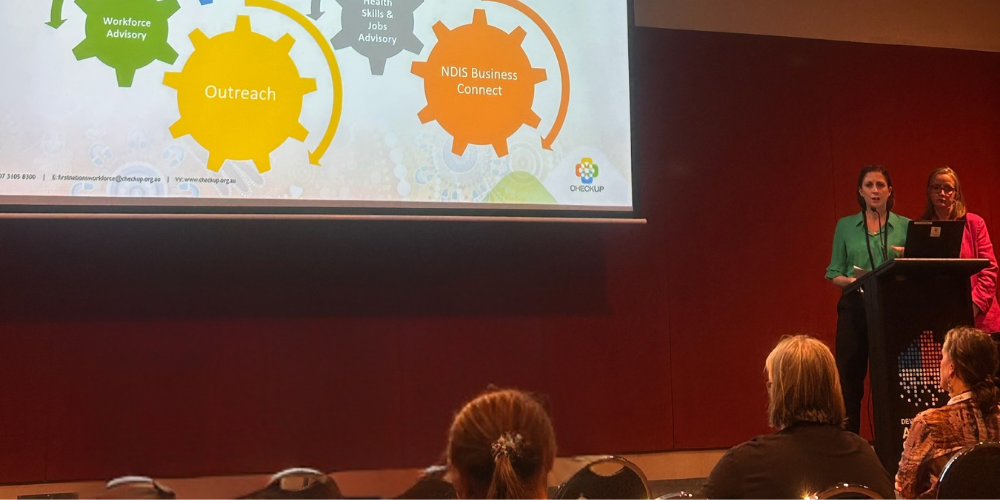
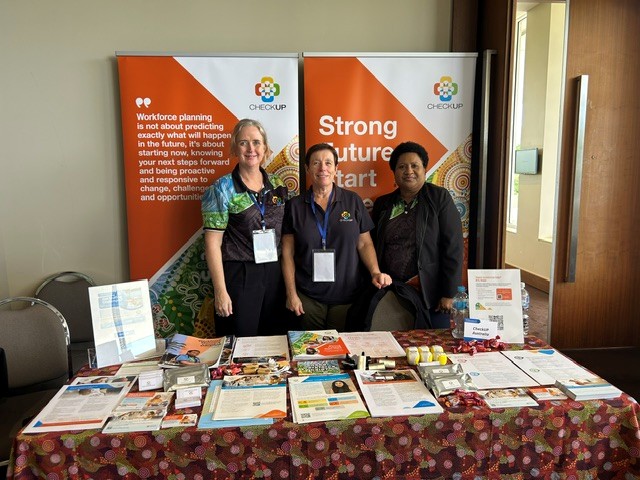
Carissa and Vicky presenting CheckUP’s workforce and industry development programs at DNAC26.
Bringing the conversation home
One of the most valuable parts of attending DNAC26 was stepping outside the day-to-day and seeing workforce
planning within the bigger picture of Northern Australia. The conference reinforced something I see every day
through my work.
Workforce planning is economic development. It is service planning. It is community development.
If we want strong communities, we need strong organisations. If we want strong organisations, we need
sustainable workforces. And if we want a strong future for Northern Australia, we need to plan for the
people who will build it.
Start your workforce journey today with CheckUP
Find your bottleneck. Prioritise the pressure. Take action. Build strong futures.
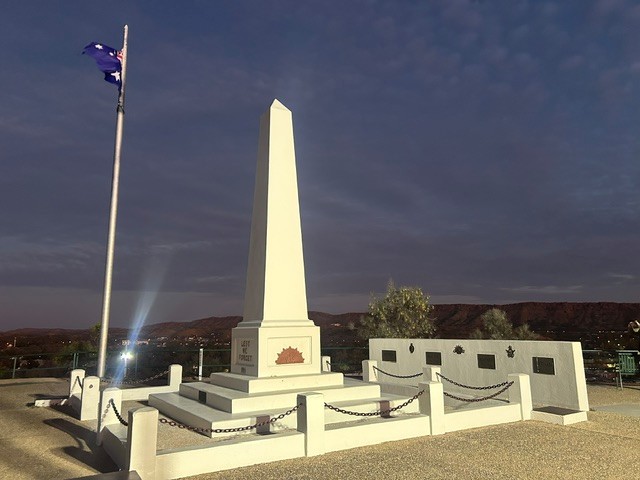
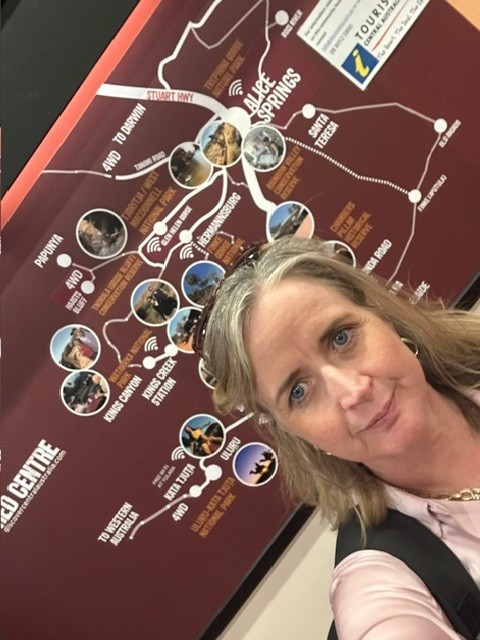
Swipe or scroll to see more. Snapshots from across the conference — Alice Springs sunsets, keynote sessions, and the road home.
First Nations students participate in six-day healthcare immersion tour
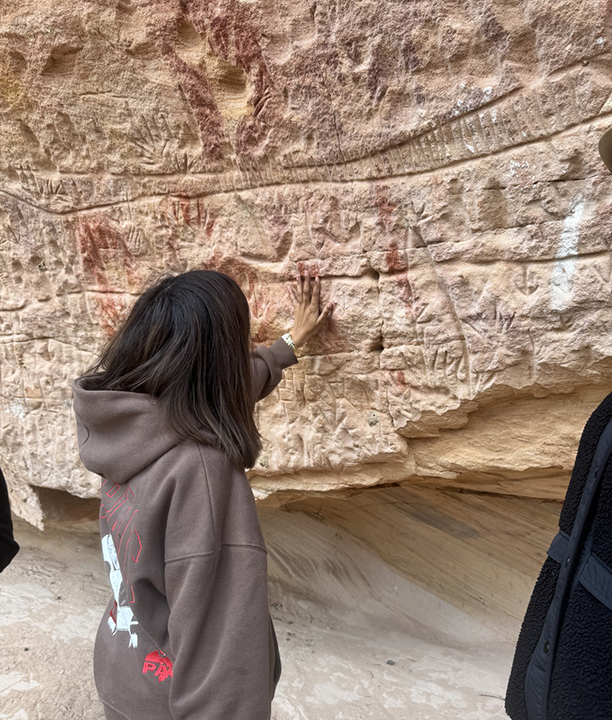
Recently, First Nations students from Heatley Secondary College participated in a six-day healthcare immersion tour designed to provide valuable exposure to regional and rural healthcare services, remote communities, and culturally informed on-Country learning experiences.
Travelling west from Townsville through Charters Towers, Hughenden, Winton, and Longreach, students explored a range of healthcare settings before taking part in a cultural immersion program at Gracevale Stationon Iningai Country in Turraburra.
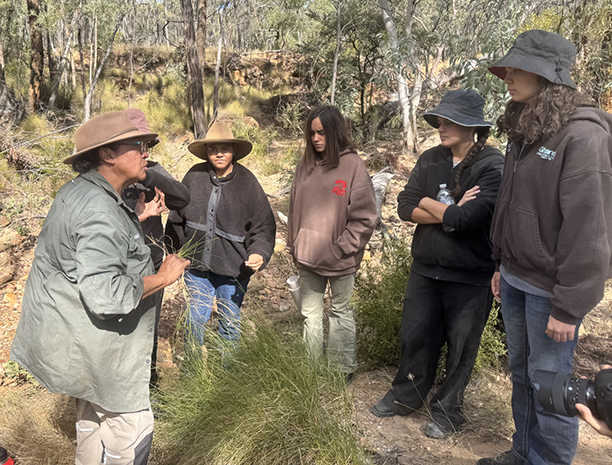
During their time on Country, students gained a deeper understanding of the history of the Iningai Nation, the impact of colonial settlement across the region, and the cultural significance of Turraburra today. They visited important cultural sites, including the Dinosaur Pathway, the Sacred Waterhole rehabilitation project, and the Seven Sisters Story Wall. Students also participated in traditional bush medicine activities and learned about native lemongrass harvesting, providing a meaningful connection to Country and First Nations knowledge systems.
The Gateway to Industry Schools Program – Health, appreciates the generous financial support of On Country and Health Workforce Queensland that enabled the students to participate in this life-changing experience.
The success of the tour was also made possible through the extraordinary generosity of the regional communities along the journey. Healthcare providers generously donated their time to host tours of their facilities and share insights into careers in health. Local attractions provided complimentary entry, businesses offered discounted meals, and Winton Shire Council kindly provided complimentary accommodation for the group’s stay in Winton.
Truly an amazing experience for our Townsville students.
How outreach changed the trajectory of a patient with diabetes in regional QLD
For years, Dr Tom Dover’s patient Sophia managed type 1 diabetes the way most people do. Four insulin injections a day, a glucose monitor on her arm, and a constant stream of small decisions about food, activity, and timing. Research published in Scientific Data shows that people with type 1 diabetes make over 180 health-critical decisions a day. The relentless mental load takes a toll.
Sophia was doing everything right. But the numbers still told a worrying story. Only around 30 percent of her glucose readings were landing in the healthy range and her long-term blood sugar average was well above target. Without stable glucose control, she was facing a future that could include heart disease, kidney damage, nerve damage and vision loss.
What Sophia needed wasn’t more effort. She needed better tools and someone who knew what those tools could do.
“The biggest change I’ve seen in my career has been technology.”
Dr Tom Dover, endocrinologist
Dr Tom Dover is an endocrinologist based in Brisbane who has spent most of his 12-year career travelling to communities across Queensland to see patients who would otherwise have no access to a specialist of his kind. Through CheckUP’s outreach program, Sophia had been seeing Dr Dover at Bidgerdii Community Health Service for around five or six years. Long enough for him to know her situation well, and to know she was a strong candidate for a semi-automatic insulin pump.
The pump connects to a glucose sensor worn on the body and adjusts insulin delivery automatically in response to rising and falling levels. It doesn’t replace the person managing their diabetes, but it takes on a significant share of the background work. Dr Dover describes it as the technology holding the patient’s hand.
The barrier was cost. Insulin pumps are not subsidised for most adults with type 1 diabetes in Australia unless they hold private health insurance, and the upfront price sits between $7,000 and $10,000. For many people in regional communities, that’s simply not a realistic option.
So Dr Dover approached Medtronic, one of the major pump manufacturers, presented Sophia’s case and asked whether they could help. They approved the request and supplied the pump at no cost.
What happened next?
Lisa Grice, Sophia’s diabetes educator in Rockhampton, handled the setup and training. Within three days, the results were clear.
Sophia’s journey of time in a healthy glucose range
30%
before the pump
70%
within the first week
80%+
now, well beyond the clinical benchmark
Her long-term blood sugar average came down to target for the first time. The dangerous lows that had been a regular feature of her life have essentially stopped.
Sophia sleeps better now. There’s less anxiety around food, fewer alarms waking her in the night and significantly less long-term health risk sitting on the horizon. For Sophia, the change wasn’t just clinical. It was the kind of shift you feel in your daily life.
There is no endocrinologist permanently based in Rockhampton or Central Queensland. Without Dr Dover travelling there through CheckUP’s outreach program, nobody local had the specialist knowledge to identify Sophia as a pump candidate, navigate the complexity of device settings or build the kind of industry relationships that made a compassionate supply possible.
Dr Dover is direct about this. Diabetes technology has advanced so quickly that GPs are not equipped to keep up with it, and the care Sophia received required someone who had spent years building exactly this kind of expertise.
He’d like to see more patients experience the same outcome. Government subsidies for insulin pumps are being lobbied for, and lower-cost options exist for people who want to try the technology first. But for most people right now, access comes down to private health cover, geography and the occasional doctor who knows who to call.
Sophia was fortunate. That shouldn’t be the deciding factor.
CheckUP celebrates 10 years as Visiting Optometrists Scheme fundholder
As the Visiting Optometrists Scheme celebrates 50 years of bringing eye care to rural and remote Australia, CheckUP reflects on its own decade of leadership in Queensland.Read more
20 January 2026
Kilkivan outreach provider retiring after 12 years of dedicated service
CheckUP recently attended a farewell event in Kilkivan for Dr Sandra Zeeman to celebrate over 12 years of providing Outreach GP services to the community. Dr Zeeman was instrumental in establishing this service back in 2013.Read more
11 November 2025
How local healthcare shared one Emerald family’s future for the better
In March 2024, ten-year old Summer’s world shifted in the Emergency Department at Emerald Hospital. Diagnosed with Type 1 Diabetes, Summer was airlifted by a CapRescue helicopter to Rockhampton.Read more
20 October 2025
CheckUP’s Health Industry Workforce Advisor brings workforce knowledge to the APNA Festival of Nursing
CheckUP’s Health Industry Workforce Advisor (IWA) Alina Khalid, had an insightful time at the APNA Festival of Nursing, connecting with health leaders from across the country. She explored exciting workforce models that are shaping the future of care, including team-based approaches and the use of AI in health.Read more
Looking beyond the sector: Why diverse experience strengthens workforce capability
by Carissa McAllister, First Nations Industry Workforce Advisor (Health and Social Assistance)
When organisations think about workforce development, there can be a tendency to look within their own sector and what they know for solutions. However, some of the most valuable workforce insights come from experience gained across different industries, regions, and organisational environments.
To address workforce challenges, organisations should consider broadening their recruitment lens and looking beyond their own sector for talent. Candidates who share the organisation’s values and purpose often bring highly transferable capabilities such as leadership, problem-solving, relationship building, and strategic thinking, along with fresh perspectives and innovative approaches to workforce development.
For Rosalyn Mann, Workforce Sustainability Lead at Wakai Waian Healing, a growing organisation delivering culturally grounded, trauma-informed mental health services across Queensland, a diverse career journey has shaped her approach to workforce strategy, leadership, and organisational capability. Her experience across multiple industries has provided unique insights into building sustainable workforces, developing people, and creating organisations where both employees and communities can thrive.
“I have spent my career moving across industries, regions and organisational sizes, and that journey has shaped the way I think about people, capability and workforce strategy,” says Rosalyn.
“I started in universities and community organisations, moved through major infrastructure and natural resource projects, stepped into mining and resources with some of Australia’s largest employers, and later supported small Indigenous owned businesses and local government. Each sector taught me something different about how people work, what they need to thrive, and how organisations grow when they invest in their workforce.”
Throughout her career, Rosalyn has observed that while industries may differ, the foundations of workforce success remain remarkably consistent.
“Working in multinationals gave me a deep understanding of structure, governance, leadership development and large-scale workforce systems. Government roles taught me the importance of transparency, community engagement and service delivery. Small business sharpened my ability to be practical, agile and hands on. Across all of it, I learned how to build processes that actually work for people, not just for policy documents.”
Now working in the health sector, Rosalyn draws on lessons from every stage of her career.
“Coming into the health sector, I brought that full breadth of experience with me. I may be new to health, but I am not new to the workforce. The fundamentals of building capability, supporting people, strengthening culture and planning for the future are universal.”
She believes one of the greatest benefits of working across sectors is the ability to identify opportunities and solutions that may otherwise go unnoticed.
“In fact, having worked across so many sectors, I can see opportunities that others might miss. I understand how to translate good practice from one industry into another, how to design systems that fit the organisation rather than forcing the organisation to fit the system, and how to think creatively when the usual solutions are not enough.”
Rosalyn is also a strong advocate for broadening recruitment approaches and recognising the value of transferable skills.
“One of the messages I share often is that organisations should not limit themselves to recruiting only from within the health sector. Functional knowledge can be learned. What matters is the ability to lead people, build systems, understand behaviour, manage change and think strategically.”
“When you bring in people with diverse sector backgrounds, you also bring in new ways of thinking, new problem-solving approaches and a broader understanding of how different industries tackle similar challenges.”
For Rosalyn, workforce capability is built through diversity of experience, perspectives, and ideas.
“My career has shown me that workforce capability is built through diversity of experience, not sameness. And in this role, I draw on every part of my background, from mining to government to community relations to small business, to help build a strong, sustainable and people-centred workforce for the future.”
Are you looking for tailored business support at no cost? We can help you.
Contact Carissa McAllister
– First Nations Industry Workforce Advisor
Listening, Learning and Supporting Workforce Solutions Across Queensland
CheckUP’s Industry Workforce Advisors are Supporting Workforce Solutions Across Queensland
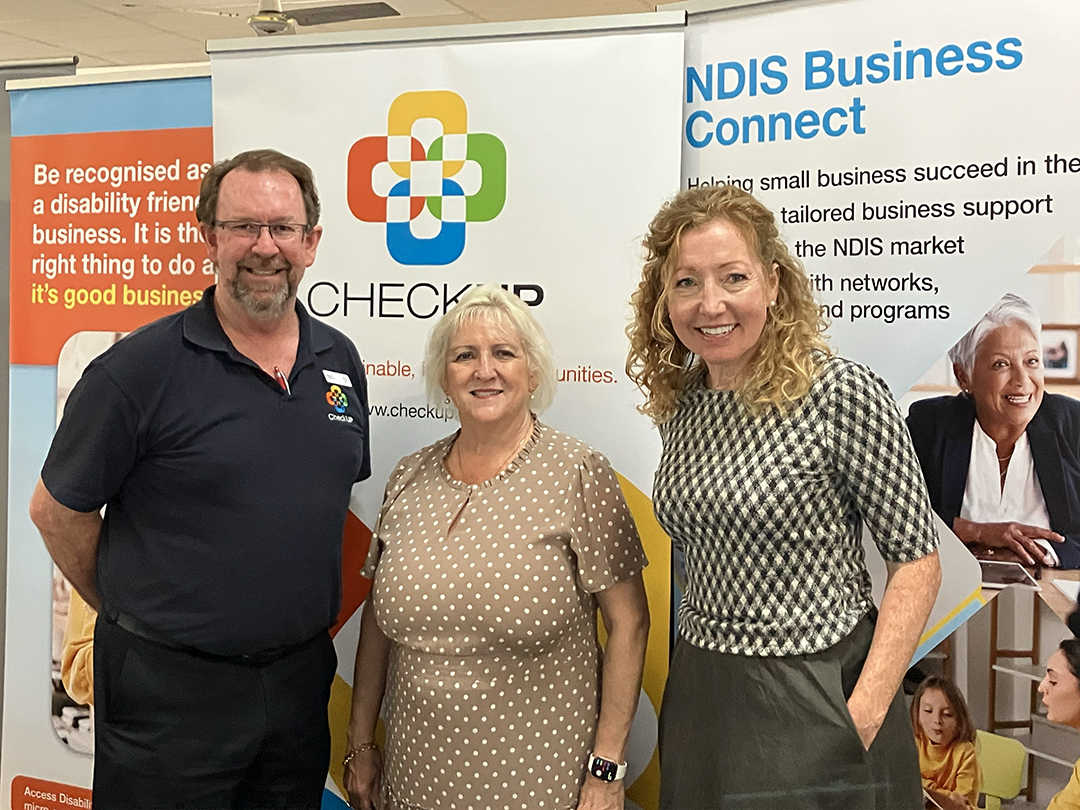
Throughout May for Queensland Small Business Month CheckUP’s Industry Workforce Advisors (IWAs) Carissa McAllister, Stuart Coward and Alina Khalid travelled across Queensland to participate in Queensland Small Business Month events and connected with business owners, community leaders and employers in the health and community service sectors.
The Industry Workforce Advisors attended events spanning metropolitan, regional, rural and remote communities, and also with a strong focus on supporting the workforce of Aboriginal and Torres Strait Islander organisations and businesses.
While every community is unique, common themes emerged wherever conversations took place.
Employers consistently spoke about workforce shortages, challenges attracting and retaining staff, and increasing demand for services. Many small to medium-sized business owners described the growing pressure of balancing frontline service delivery with workforce and business management responsibilities, often with limited time and resources. For many Aboriginal and Torres Strait Islander organisations and businesses, these challenges are further compounded by geographic isolation, limited local workforce pools and difficulties accessing culturally responsive and meaningful workforce development supports.
What stood out most was the immense energy of purpose and the willingness of businesses and organisations to share ideas and explore practical solutions.
For GP practices and allied health businesses, the financial pressure is real. With Medicare indexed at 2.6% against CPI at 4.2% and mandatory wage increases of 4.75%, practices are absorbing the pressure, and that strain flows directly into the workforce. When non-clinical staff positions go unfilled, clinical staff absorb the load, and burnout follows. Across the broader health sector, the pattern is the same: Clinicians answering phones, allied health practitioners managing their own bookings, qualified professionals spending time on tasks a supported administration team could handle. One practical lever available right now is building that support workforce through vocational pathways helping businesses explore traineeships, entry-level roles to grow the non-clinical team that frees clinicians to do what they were trained to do and keep the business viable.
Businesses also expressed the value of personalised workforce advice. Many employers are aware that support programs and government initiatives exist but are unsure or overwhelmed where to start, or how opportunities apply to their unique circumstances. The IWA program helps bridge this gap by providing tailored workforce advice, supporting businesses to identify practical workforce actions, and connecting them with relevant government programs, funding opportunities and workforce initiatives.
Another consistent message was the importance of place-based solutions. Communities emphasised that workforce challenges in rural and remote Queensland require locally informed responses developed in partnership with communities, employers, service providers and governments. Solutions that work in one location may not be suitable elsewhere, reinforcing the need for flexible approaches that recognise local strengths, priorities and aspirations.
For CheckUP’s IWA team, these conversations reinforced the importance of listening first, building relationships and working alongside businesses and communities to identify practical workforce solutions.
By understanding local challenges and opportunities, we can better support employers to strengthen their workforce, improve service delivery and create sustainable employment pathways for Aboriginal and Torres Strait Islander peoples across Queensland.
The First Nations Industry Workforce Advisor Program is proudly funded and supported by the Queensland Government.
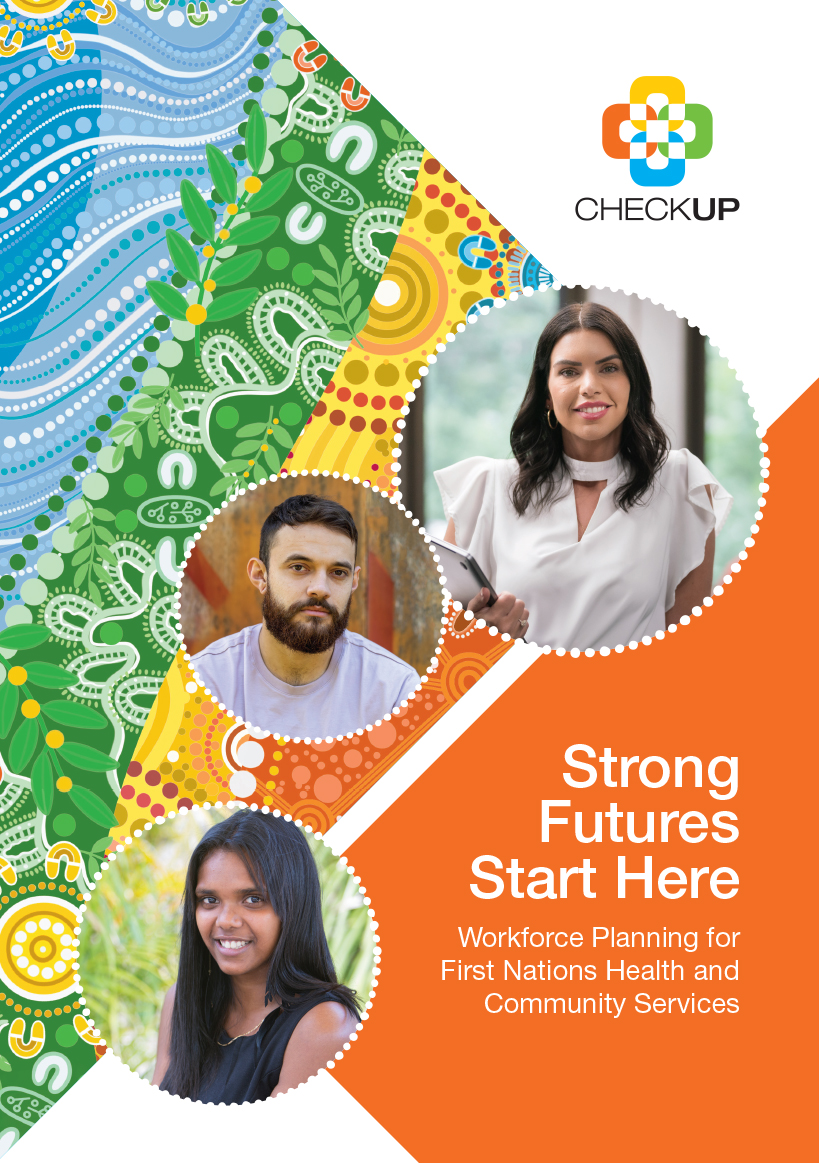
Download Strong Futures Start Here – How to start workforce planning for First Nations health and community services.
To learn more about how CheckUP can support your workforce solutions visit the link below.
What it really means to be ALL IN for reconciliation in health
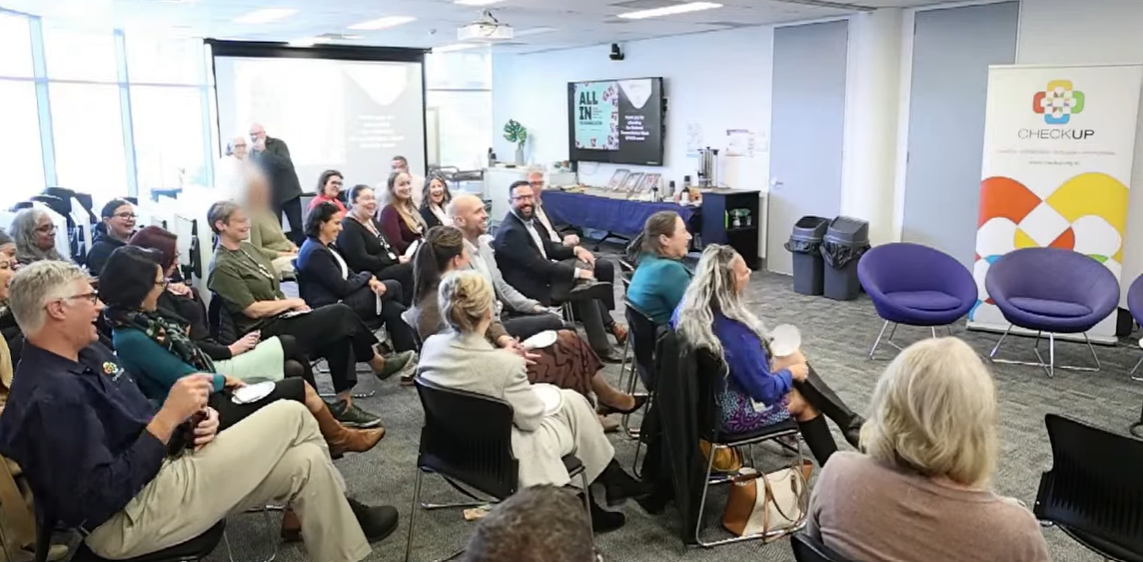
Each year, National Reconciliation Week invites us back into conversations that help strengthen understanding and connection across our communities. These conversations are necessary. At the National Reconciliation Week 2026 CheckUP QPHCN event, a room full of health, workforce, community services professionals and supporters sat with this year’s theme: ALL IN. This event was held in person and also streamed live to participants across Queensland. The conversations that followed were honest, practical, and at times challenging in ways that prompted deeper reflection and motivated more deliberate action.
CheckUP extends our sincere thanks to speakers for generously sharing their wisdom, personal experiences and also insights into actions we can take as individuals and as a larger collective.
The 1967 referendum gave Aboriginal and Torres Strait Islander people the right to be counted in the national census. The anniversary falls on 27 May, the first day of National Reconciliation Week.
The difference between a Welcome to Country and an Acknowledgement of Country
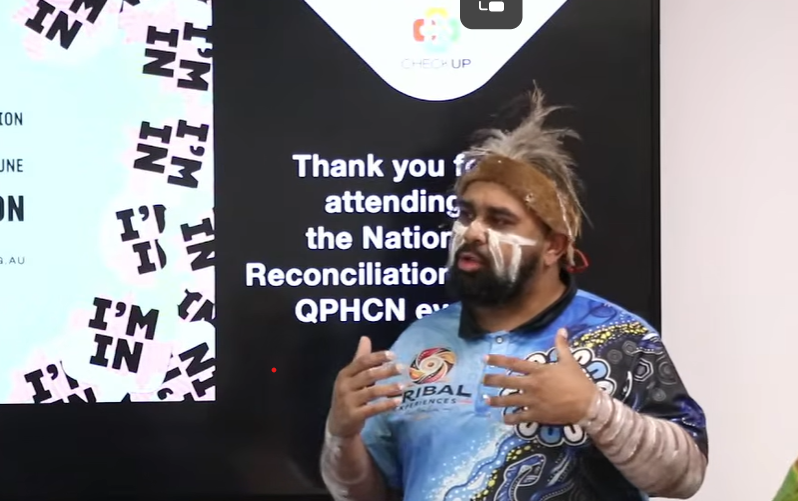
Joseph delivered the Welcome to Country and shared his knowledge
Joseph from Tribal Experiences opened the morning with a Welcome to Country on behalf of the Yuggera, Jagera and Turrbal nations, and took time to explain a distinction that many people in the room admitted they hadn’t fully understood before. An Acknowledgement of Country can be given by anyone, at any event. A Welcome to Country is different. It comes from a Traditional Owner, carries thousands of years of protocol, and is not something that can simply be arranged at short notice.
He spoke about the message stick, known in language as “Yahweh,” which functioned like a passport between tribal groups, and about his grandfather Mukund, one of the last messenger men for the Yuggera tribe, who could speak up to 15 different languages across south-east Queensland. It was a grounding way to open the day, a reminder that the protocols we observe at events like this one have deep meaning.
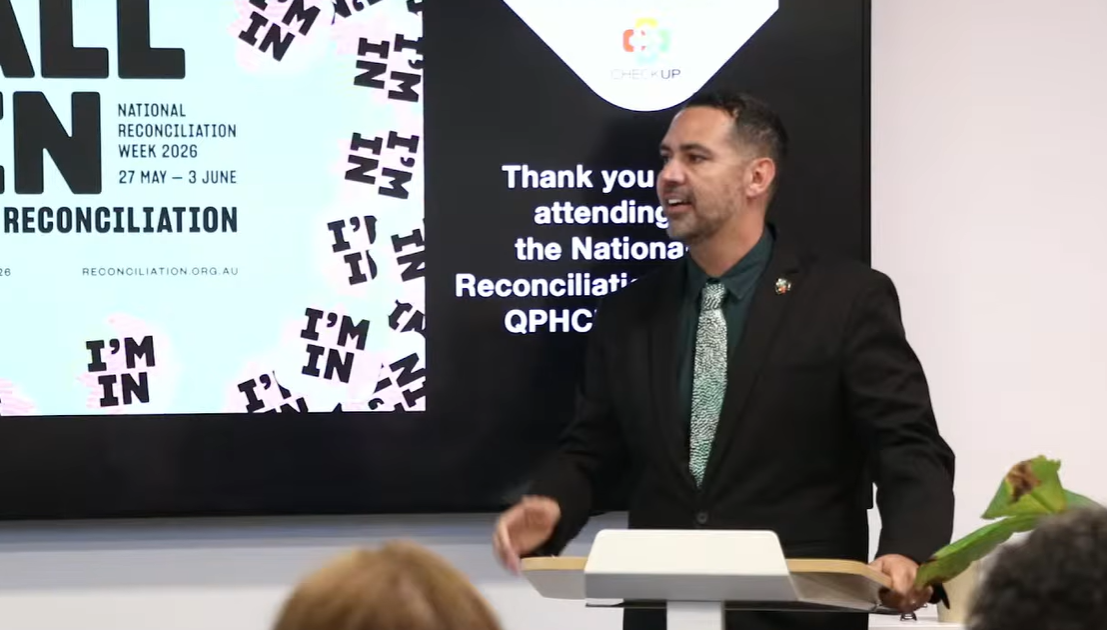
MC Kieran Chilcott, CEO of Kalwun Development Corporation and CheckUP Board Director, opened with a reflection on the 1967 referendum that grounded everything that followed. He pointed out that 59 years is within living memory, and that the freedoms Aboriginal and Torres Strait Islander people now hold as basic rights were denied within that time.
“That’s 59 years ago that this anniversary exists. So one generation above me, we were living in a time where Aboriginal and Torres Strait Islander people couldn’t choose who they would like to marry, choose where they want to live, choose to travel, be afforded equal wages.”
He also challenged the room on how they think about their role in reconciliation, moving away from the language of allyship toward something with more weight to it.
“Many people call them allies. I call them accomplices.”
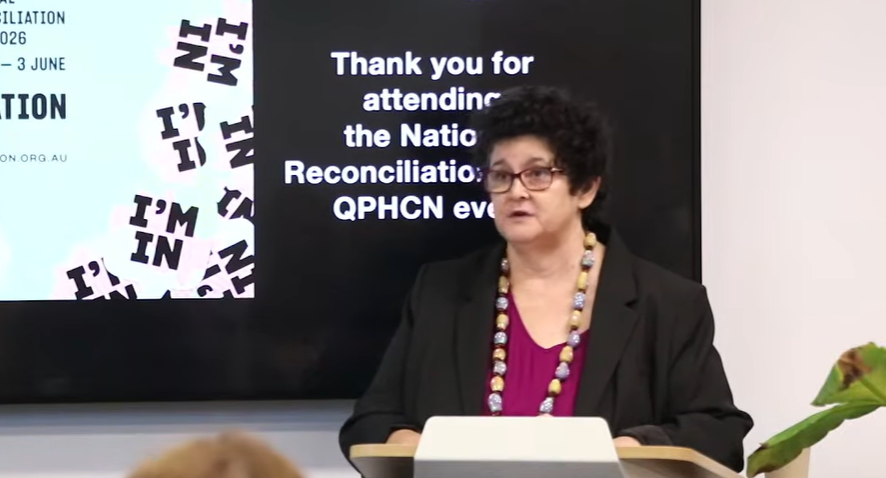
Helena Wright shared her journey and valuable insights
Helena Wright, Board Director of Reconciliation Queensland and deputy CEO of the Queensland Aboriginal and Torres Strait Islander Child Protection Peak, delivered the keynote. She spoke directly to the tension that many organisations in the room will recognise: the pressure to demonstrate action and report outcomes, alongside the reality that genuine reconciliation moves at a different pace.
“Meaningful change only happens at the speed of trust and at the community’s pace. Trust can’t be legislated, it can’t be purchased, and it certainly can’t be rushed. Trust is built through consistency. It’s built when people listen before they speak, when organisations honour their commitments, and when leaders continue to engage even when the conversations become difficult.”
On truth telling, she was clear that it is not about assigning blame but about building the shared understanding that makes genuine progress possible.
“In the health sector, truth telling means acknowledging that Aboriginal and Torres Strait Islander peoples have not always experienced health systems as a place of safety, trust and respect.”
And on cultural safety, she was emphatic that it is an organisation-wide responsibility, not something that sits with a single team or a policy document.
“Cultural safety is not a checklist. It’s about an experience. It’s reflected in whether people feel respected as soon as they walk through the door, and whether they feel safe enough to come back.”
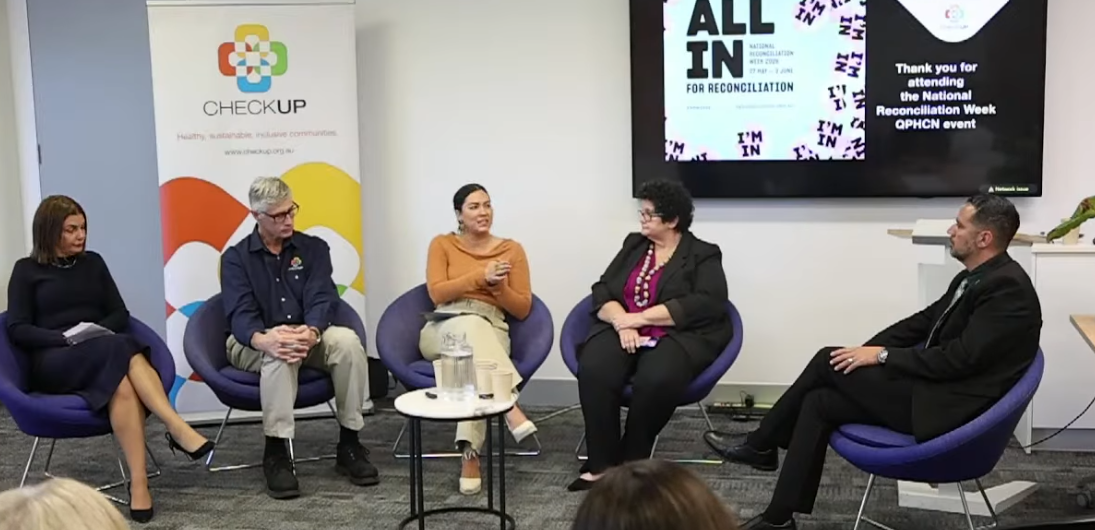
The panel brought together Karen Hale-Robertson (CEO, Open Minds), Tony de Ambrosis (CEO, CheckUP), Meena Waller (COO, Cancer Council Queensland) and Helena Wright, with Kieran Chilcott drawing out some of the most practical thinking of the day.
On what ALL IN actually means day to day
Karen Hale-Robertson framed it around truth telling and active listening, and the willingness to correct misunderstandings in the moment, even when it’s uncomfortable to do so. She was pragmatic about why those misunderstandings happen in the first place.
“A lot of the time they’re not deliberate, they just haven’t taken the time to learn.”
For Tony de Ambrosis, the theme landed as a personal challenge and a call to action, a prompt to look at his own sphere of influence and ask what he could actually do.
“For me, ALL IN was a really good thing because it actually challenged my thinking. What am I doing to make a difference? It’s about the actions, what can I do in my sphere of influence.”
Meena Waller approached it through the lens of what she called “universal proportional” design, arguing that when organisations build systems and services with the most marginalised people genuinely in mind, the result is better for everyone who uses them.
“When we do it well, it’s a really exciting community place world to live in.”
The panel was asked what they wish organisations would stop doing. Karen Hale-Robertson pointed to the gap between visual gestures and actual practice: organisations that display First Nations artwork but whose day-to-day culture, hiring decisions and service design tell a different story.
“That tokenistic setting. It doesn’t go very deep at all.”
Meena Waller pushed further on the measurement of cultural safety, and who actually gets to define it.
“The only person that can tell you if their experience was a culturally safe one is the person that experienced it. Cultural humility is a mindset, not a badge.”
Responding to an audience question about young people, Kieran Chilcott described what he sees every week at the Aboriginal cultural centre his organisation runs on Burleigh Headland, where more than 8,000 students visit each year. Many of them come back with their families.
“These are non-Indigenous children who haven’t had much to do with Aboriginal and Torres Strait Islander culture, who are dragging mums and dads and families back in. The optimism there is because I get to see it and I feel it.”
If there was one thread running through the whole morning, it was that reconciliation is not a program with a completion date. It shows up in how organisations listen, who they hire, how their intake forms are written, and whether the people they serve feel genuinely safe when they arrive and safe enough to return. The theme ALL IN is a call for that kind of consistent, deliberate presence in the everyday work, not just during Reconciliation Week.
CheckUP’s reconciliation journey is ongoing. If you’d like to be part of it, find out how to become a supporter and help us continue this work across Queensland.
CheckUP celebrates 10 years as Visiting Optometrists Scheme fundholder
As the Visiting Optometrists Scheme celebrates 50 years of bringing eye care to rural and remote Australia, CheckUP reflects on its own decade of leadership in Queensland.Read more
20 January 2026
Kilkivan outreach provider retiring after 12 years of dedicated service
CheckUP recently attended a farewell event in Kilkivan for Dr Sandra Zeeman to celebrate over 12 years of providing Outreach GP services to the community. Dr Zeeman was instrumental in establishing this service back in 2013.Read more
11 November 2025
How local healthcare shared one Emerald family’s future for the better
In March 2024, ten-year old Summer’s world shifted in the Emergency Department at Emerald Hospital. Diagnosed with Type 1 Diabetes, Summer was airlifted by a CapRescue helicopter to Rockhampton.Read more
20 October 2025
CheckUP’s Health Industry Workforce Advisor brings workforce knowledge to the APNA Festival of Nursing
CheckUP’s Health Industry Workforce Advisor (IWA) Alina Khalid, had an insightful time at the APNA Festival of Nursing, connecting with health leaders from across the country. She explored exciting workforce models that are shaping the future of care, including team-based approaches and the use of AI in health.Read more
Improving disability awareness across the healthcare workforce is critical to creating long-term change
CheckUP and Access for All have recently released a media release to help raise awareness and improve healthcare accessibility for people with disability. See some excerpts below, and view the full media release via the button link below.
Despite the findings of the Disability Royal Commission, Australians with disability are still facing significant barriers when accessing healthcare, with growing concern the healthcare system is still failing to adequately prepare workers to provide proper support.
Access for All is an online disability awareness course designed to help healthcare providers better understand and support people across a range of healthcare settings. Access for All is eligible for continuing professional development points for 35+ professions.
Dr Palipana said improving disability awareness across the healthcare workforce was critical to creating meaningful long-term change, with initiatives like Access for All helping close the training and awareness gap across the sector.
“Healthcare needs to put the humanity back into health,” Dr Palipana said.
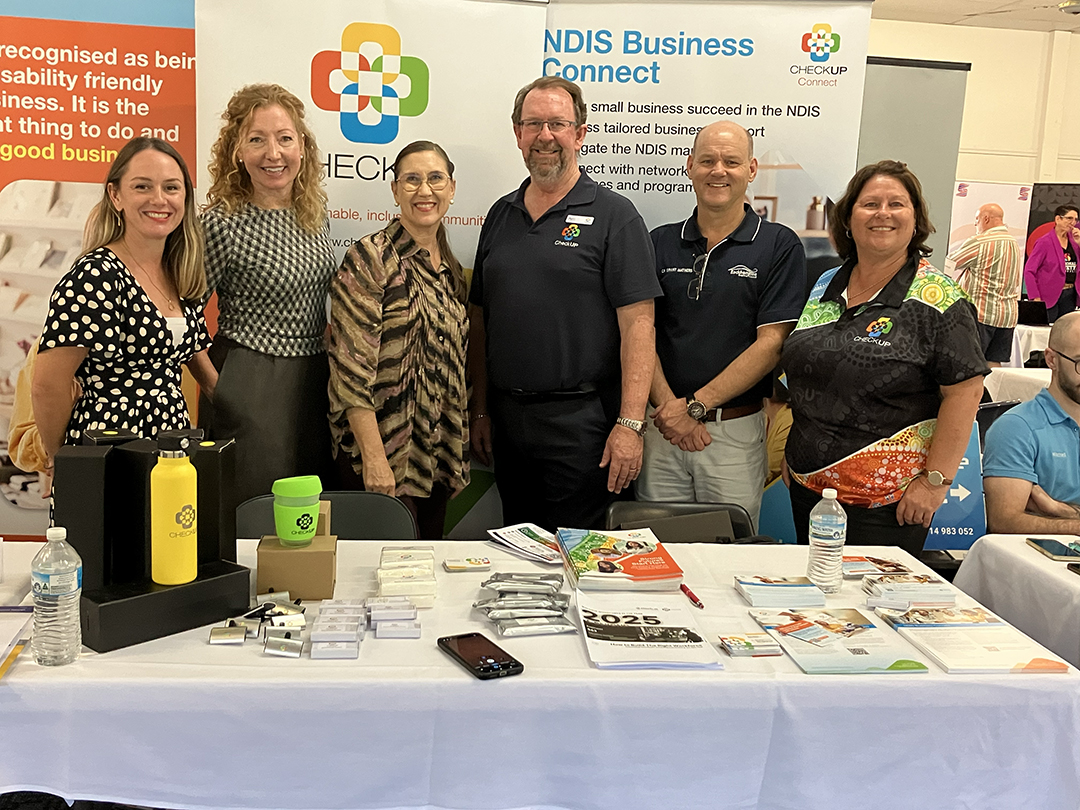
As part of 2026 Queensland Small Business Month, CheckUP’s Workforce and Industry Development Team recently hosted “Let’s Talk Business Solutions”. This was a targeted event for Community Services and NDIS businesses across Rockhampton and the surrounding areas.
CheckUP’s Workforce Industry Development Team, Kylie Hogan, Simon Whitehart, Stuart Coward, and Debbie Rooskov delivered practical presentations addressing current business and workforce challenges. We were also joined by Queensland Small Business Financial and Wellbeing Counsellor, Sharon Kingston, who contributed valuable insights and solutions during the discussion.
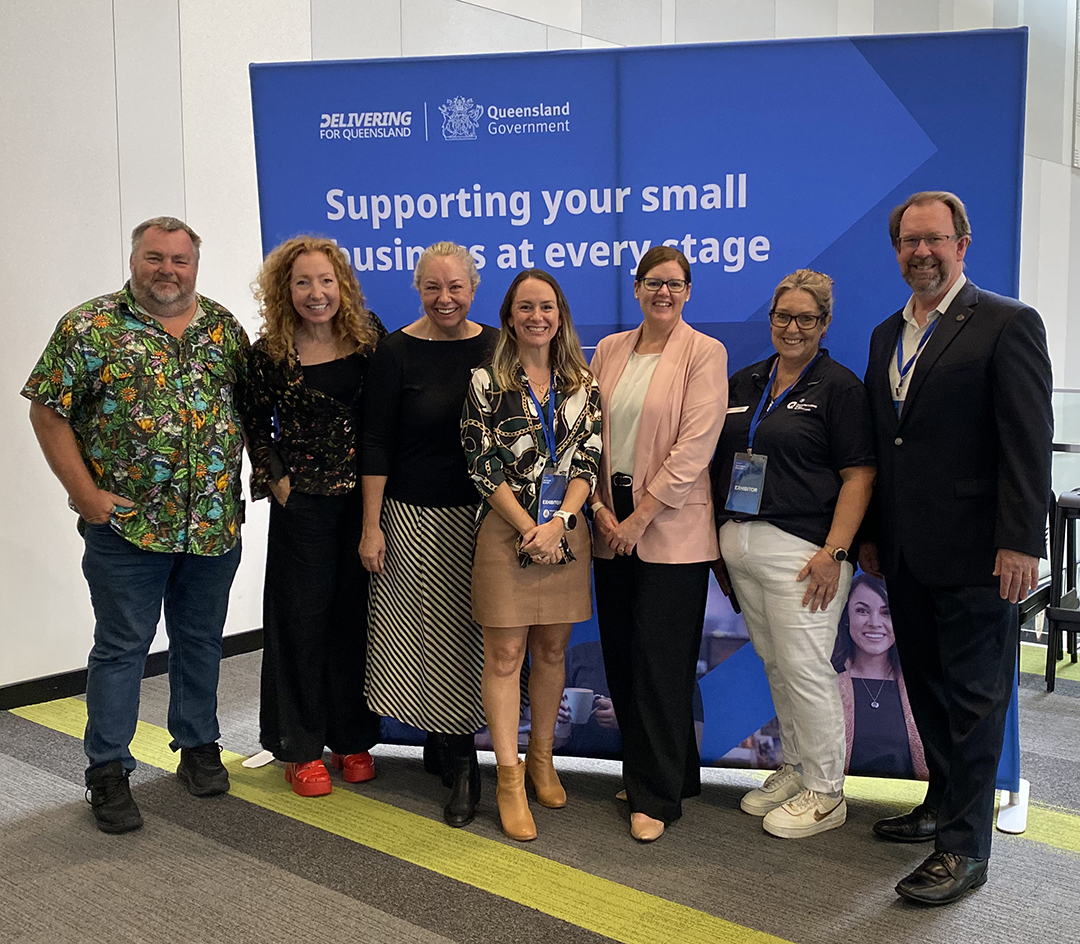
Immediately following our event, we connected with fellow Industry Workforce Advisors, Melanie Vearing (Business, Information & Communication Technology) and Victoria Hansen (Retail & Personal Services), at the Central Queensland Small Business Expo, proudly hosted by Advance Rockhampton.
Throughout the Expo, we met with local businesses, answered workforce-related questions, and promoted the full range of Business and Workforce support Programs available. We also had the opportunity to speak with representatives from all three levels of government, including:
These conversations reinforced the shared commitment across government and industry to support small business growth and workforce development in Central Queensland.
If your business is facing business or workforce challenges, or you’d like advice on accessing programs, funding, or tailored solutions, the CheckUP team is here to help.
The Business Support and Workforce programs are proudly supported and funded by the Queensland Government.
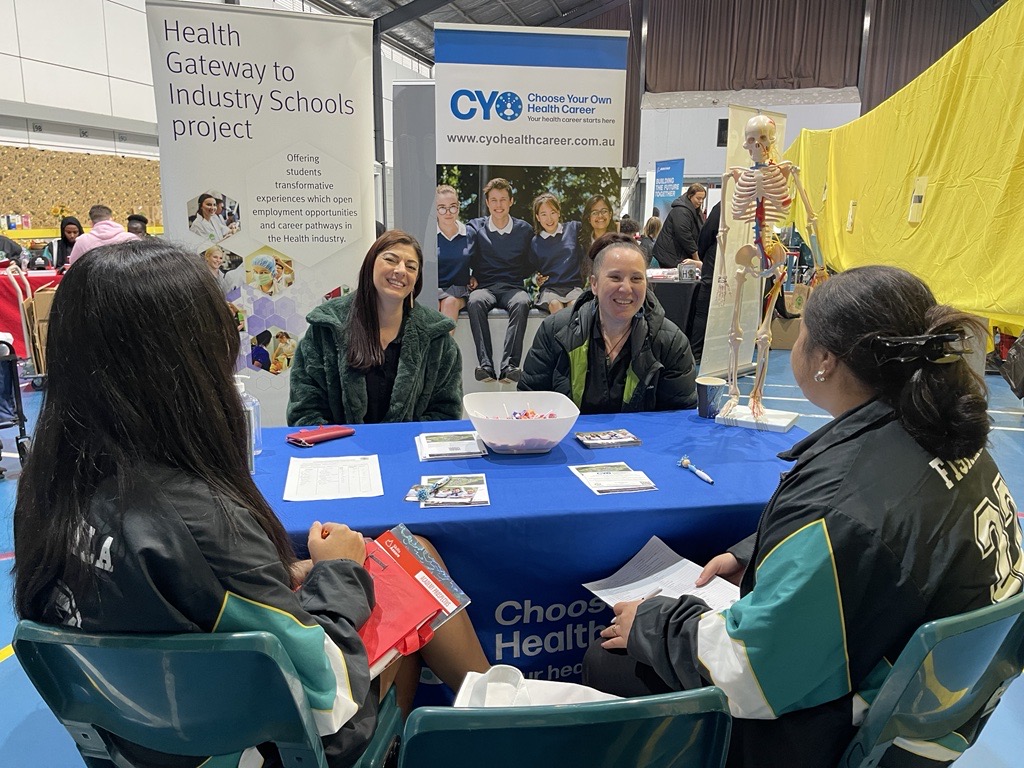
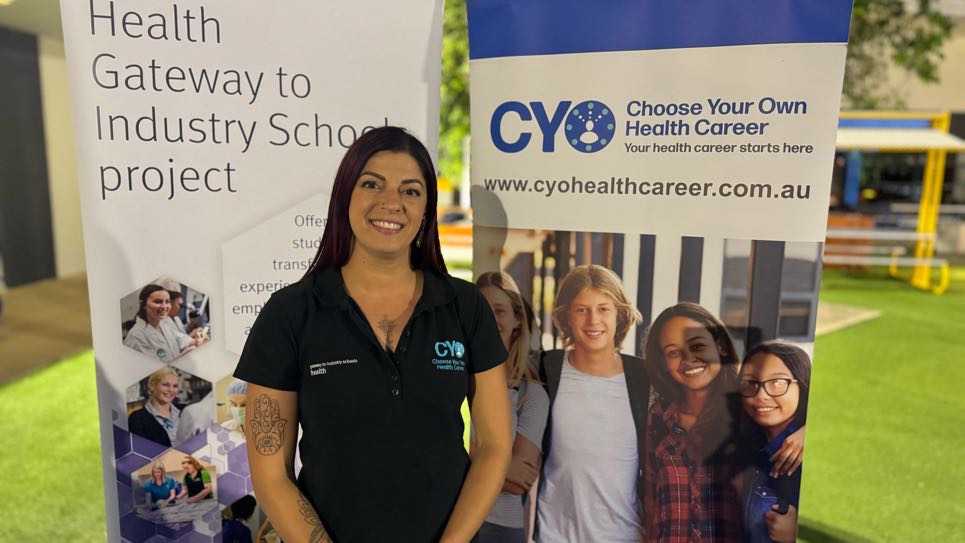
Sabrina has been part of the CheckUP team since June 2006. For the last 5 years she’s been helping the Queensland community as the Gateway Schools Manager. She works across the state to bridge the gap between secondary schools and the health industry, with a particular focus on regional, rural and remote communities.
The Gateway to Industry Schools program is proudly supported and funded by the Queensland Government.
Celebrating 20 years at CheckUP!
Why did you choose to apply for work at CheckUP?
Because of my passion in health and CheckUP’s clear commitment to improving health equity and strengthening the health sector, particularly for communities that need it most. I was also really interested in the diversity of work that CheckUP offered.
What does a typical day at work look like for you?
A typical day is quite varied and very people-focused. It usually involves working closely with schools, health services, tertiary education providers and industry partners to coordinate engagement activities such as industry exposure opportunities, events and pathway initiatives.
I spend a lot of time building and maintaining relationships, meeting with stakeholders, following up opportunities, problem-solving and aligning education needs with industry capacity. Alongside this, I manage planning, budgets and reporting to ensure the project stays on track and delivers meaningful outcomes for schools, students and industry partners. No two days are the same, but the common thread is connecting schools with industry to create practical pathways into the health sector.
How does your role contribute to rural and remote communities?
The Health Gateway Project is a statewide initiative and, in my role, I oversee the implementation of Health Gateway activities in regional, remote and rural Queensland. These communities often have fewer resources and less exposure to health career pathways, so bringing those opportunities directly to students where they live makes a real difference.
What’s the biggest transformation you see with people that you support?
Many students initially have a very narrow view of the health industry. They think of doctors and nurses, and little else. Watching that expand, seeing a student discover a role they had never heard of and realise it is something they could genuinely pursue, that shift in confidence and possibility is the transformation that matters most.
What’s your favourite part about CheckUP?
I love working with CheckUP because of the people and the culture. There is a genuine commitment to doing work that matters and a real sense of purpose across the organisation.
What’s the most rewarding part of your role?
Seeing students gain confidence, clarity and excitement about their future in health. When a student walks away from an experience knowing what they want to do and believing they can get there, that is everything.
What motivates you?
The tremendous interest and enthusiasm from schools and students to participate in the project. When you see how much young people want these opportunities, and how much schools want to offer them, it is hard not to feel motivated to keep pushing the work forward.
Sabrina’s advice
“Get out to the schools and communities. The relationships you build there are what make this work real. When students can see themselves in the roles you are showing them, that is when something shifts. That moment is worth everything.”
By Carissa McAllister, First Nations Industry Workforce Advisor (Health and Social Assistance)
Workforce Planning builds the economic strength of First Nations Health and Community Services. For First Nations health and community services, economics is not about wealth. It is about thriving communities, centred by culture, families and the right to self-determination. The financial sustainability of a First Nations health or community service is inseparable from the strength, capability, and sustainability of its workforce.
Across rural and remote Queensland, we know First Nations health and community services operate in environments shaped by historical inequity, workforce shortages, and rising demand for care. On the surface, the challenges are financial: tight budgets, short-term funding cycles, recruitment pressures, compliance requirements, and increasing operational costs. Beneath these pressures, however, lies the deeper driver of sustainability: whether the service has the right people, in the right roles, with the right skills, supported in the right way to deliver culturally responsive, community-led care.
This is where workforce planning shifts from being a technical process to becoming a strategic lever for economic resilience. For First Nations health and community services, workforce planning is not simply about filling vacancies or forecasting shortages. It is about strengthening the foundations of services so they can remain stable, responsive and community-led in the face of changing demand and funding pressures.
Strong Futures Start Here
In response to these realities, CheckUP’s created the Strong Futures Start Here approach to workforce planning to recognise that thriving services begin with people. Stemming from and extending upon national and Queensland workforce, health and specific Aboriginal and Torres Strait Islander frameworks and strategies, the approach translates high-level policy into practical action. It provides a clear, accessible guide that enables services to begin workforce planning immediately with their teams, rather than waiting for external solutions and funding.
Strong Futures Start Here is designed to support organisations to assess their current workforce position, identify future risks and opportunities, and develop practical strategies that align workforce capability with community need. It moves workforce planning from a compliance requirement to a leadership practice embedded in everyday operations.
The Strong Futures Starts Here approach focuses on building workforce strength with empowered leadership, courageous communication and strong pathways for workforce development and transformation. It means creating environments where difficult conversations about sustainability, succession and service delivery can occur constructively. It also means investing in skills development, career pathways and culturally responsive workplaces that attract and retain local talent.
Empowered leadership, courageous communication and strong pathways
Empowered leadership is central to this work. When leaders move beyond reactive recruitment and focus on long-term vision with workforce capability, they can align workforce design with community priorities. In doing so, leaders balance financial stewardship with community and cultural responsibility.
Courageous communication strengthens impact. Open, facilitated dialogue enables teams and communities to discuss challenges honestly and build a path forward on a united journey to create opportunities. When these conversations occur in culturally responsive spaces, solutions reflect both operational realities and community expectations. Transparency reduces inefficiency and builds shared accountability.
Strong pathways are equally critical. Career progression, mentoring and leadership development create opportunities for local people to train, work and lead within their communities. This reduces workforce leakage to metropolitan areas and strengthens local economic participation, generating lasting social and economic benefit.
The financial dimensions of rural First Nations health and community services cannot be separated from workforce capability and cultural strength. Embedding workforce planning into organisational strategy strengthens retention, enhances productivity, reduces reactive spending, and improves service continuity. It is more than an operational tool, it is a pathway to economic resilience, cultural continuity, and long-term health equity.
Strong futures for First Nations health and community services are built on strong workforce foundations. By centring people, culture and community leadership, workforce planning underpins sustainable services and empowered communities.
More than an organisational tool, workforce planning strengthens economic sustainability, supports self-determination and keeps services resilient, culturally responsive and future-focused.