CheckUP works with partner organisations and health providers to create healthier communities and reduce health inequities through a range of initiatives.
CheckUP works with partner organisations and health providers to create healthier communities and reduce health inequities through a range of initiatives.
Enjoy the latest edition of Reaching Out, CheckUP’s Health Services newsletter. Read it to learn about 2026/27 registration and contracting updates, the new North Queensland Cancer Prevention Program, and the free Reportable Conduct Scheme workshop on Tuesday 11 August.
You’ll also find a story on collaborative diabetes outreach in Central West Queensland, a health careers trip for students from Heatley Secondary College, and free child health webinars this August.
Subscribe to our newsletters HERE, to stay up to date with our initiatives, and more.
Welcome to the July edition of CheckUP Connect. Queensland Small Business Month kept our Industry Workforce Advisors and NDIS Business Connect team on the road in May. June and the start of this month has our team connecting with and meeting health and community service employers from Brisbane to rural and remote regions. The same themes came up everywhere: finding staff, keeping them and managing growing demand. It’s a strong reminder of why place‑based, practical support matters.
In this edition, you’ll find an invite to two free online workshops on Queensland’s Child Safe Standards and the Reportable Conduct Scheme, an update on how disability inclusion is helping Queensland businesses grow stronger and details on Queensland’s Mental Health Week Community Event Grants, now open for applications. We’re also looking ahead to the 2026 Health Gateway Forum in October, bringing schools and industry together to shape Queensland’s future health workforce.
How outreach changed the trajectory of a patient with diabetes in regional QLD
For years, Dr Tom Dover’s patient Sophia managed type 1 diabetes the way most people do. Four insulin injections a day, a glucose monitor on her arm, and a constant stream of small decisions about food, activity, and timing. Research published in Scientific Data shows that people with type 1 diabetes make over 180 health-critical decisions a day. The relentless mental load takes a toll.
Sophia was doing everything right. But the numbers still told a worrying story. Only around 30 percent of her glucose readings were landing in the healthy range and her long-term blood sugar average was well above target. Without stable glucose control, she was facing a future that could include heart disease, kidney damage, nerve damage and vision loss.
What Sophia needed wasn’t more effort. She needed better tools and someone who knew what those tools could do.
“The biggest change I’ve seen in my career has been technology.”
Dr Tom Dover, endocrinologist
Dr Tom Dover is an endocrinologist based in Brisbane who has spent most of his 12-year career travelling to communities across Queensland to see patients who would otherwise have no access to a specialist of his kind. Through CheckUP’s outreach program, Sophia had been seeing Dr Dover at Bidgerdii Community Health Service for around five or six years. Long enough for him to know her situation well, and to know she was a strong candidate for a semi-automatic insulin pump.
The pump connects to a glucose sensor worn on the body and adjusts insulin delivery automatically in response to rising and falling levels. It doesn’t replace the person managing their diabetes, but it takes on a significant share of the background work. Dr Dover describes it as the technology holding the patient’s hand.
The barrier was cost. Insulin pumps are not subsidised for most adults with type 1 diabetes in Australia unless they hold private health insurance, and the upfront price sits between $7,000 and $10,000. For many people in regional communities, that’s simply not a realistic option.
So Dr Dover approached Medtronic, one of the major pump manufacturers, presented Sophia’s case and asked whether they could help. They approved the request and supplied the pump at no cost.
What happened next?
Lisa Grice, Sophia’s diabetes educator in Rockhampton, handled the setup and training. Within three days, the results were clear.
Sophia’s journey of time in a healthy glucose range
30%
before the pump
70%
within the first week
80%+
now, well beyond the clinical benchmark
Her long-term blood sugar average came down to target for the first time. The dangerous lows that had been a regular feature of her life have essentially stopped.
Sophia sleeps better now. There’s less anxiety around food, fewer alarms waking her in the night and significantly less long-term health risk sitting on the horizon. For Sophia, the change wasn’t just clinical. It was the kind of shift you feel in your daily life.
There is no endocrinologist permanently based in Rockhampton or Central Queensland. Without Dr Dover travelling there through CheckUP’s outreach program, nobody local had the specialist knowledge to identify Sophia as a pump candidate, navigate the complexity of device settings or build the kind of industry relationships that made a compassionate supply possible.
Dr Dover is direct about this. Diabetes technology has advanced so quickly that GPs are not equipped to keep up with it, and the care Sophia received required someone who had spent years building exactly this kind of expertise.
He’d like to see more patients experience the same outcome. Government subsidies for insulin pumps are being lobbied for, and lower-cost options exist for people who want to try the technology first. But for most people right now, access comes down to private health cover, geography and the occasional doctor who knows who to call.
Sophia was fortunate. That shouldn’t be the deciding factor.
CheckUP celebrates 10 years as Visiting Optometrists Scheme fundholder
As the Visiting Optometrists Scheme celebrates 50 years of bringing eye care to rural and remote Australia, CheckUP reflects on its own decade of leadership in Queensland.Read more
20 January 2026
Kilkivan outreach provider retiring after 12 years of dedicated service
CheckUP recently attended a farewell event in Kilkivan for Dr Sandra Zeeman to celebrate over 12 years of providing Outreach GP services to the community. Dr Zeeman was instrumental in establishing this service back in 2013.Read more
11 November 2025
How local healthcare shared one Emerald family’s future for the better
In March 2024, ten-year old Summer’s world shifted in the Emergency Department at Emerald Hospital. Diagnosed with Type 1 Diabetes, Summer was airlifted by a CapRescue helicopter to Rockhampton.Read more
20 October 2025
CheckUP’s Health Industry Workforce Advisor brings workforce knowledge to the APNA Festival of Nursing
CheckUP’s Health Industry Workforce Advisor (IWA) Alina Khalid, had an insightful time at the APNA Festival of Nursing, connecting with health leaders from across the country. She explored exciting workforce models that are shaping the future of care, including team-based approaches and the use of AI in health.Read more
What it really means to be ALL IN for reconciliation in health
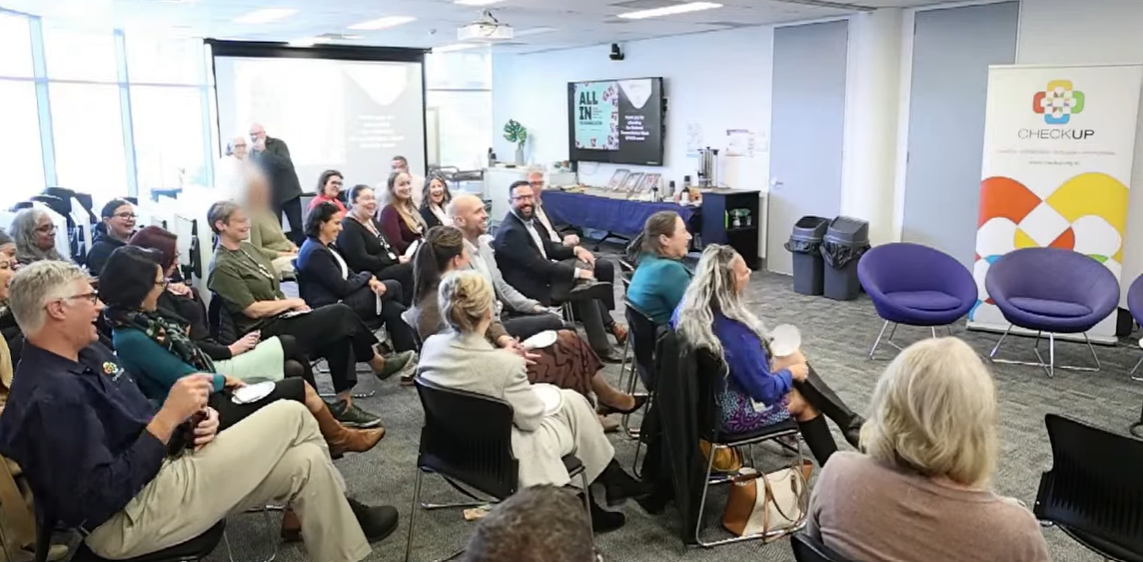
Each year, National Reconciliation Week invites us back into conversations that help strengthen understanding and connection across our communities. These conversations are necessary. At the National Reconciliation Week 2026 CheckUP QPHCN event, a room full of health, workforce, community services professionals and supporters sat with this year’s theme: ALL IN. This event was held in person and also streamed live to participants across Queensland. The conversations that followed were honest, practical, and at times challenging in ways that prompted deeper reflection and motivated more deliberate action.
CheckUP extends our sincere thanks to speakers for generously sharing their wisdom, personal experiences and also insights into actions we can take as individuals and as a larger collective.
The 1967 referendum gave Aboriginal and Torres Strait Islander people the right to be counted in the national census. The anniversary falls on 27 May, the first day of National Reconciliation Week.
The difference between a Welcome to Country and an Acknowledgement of Country
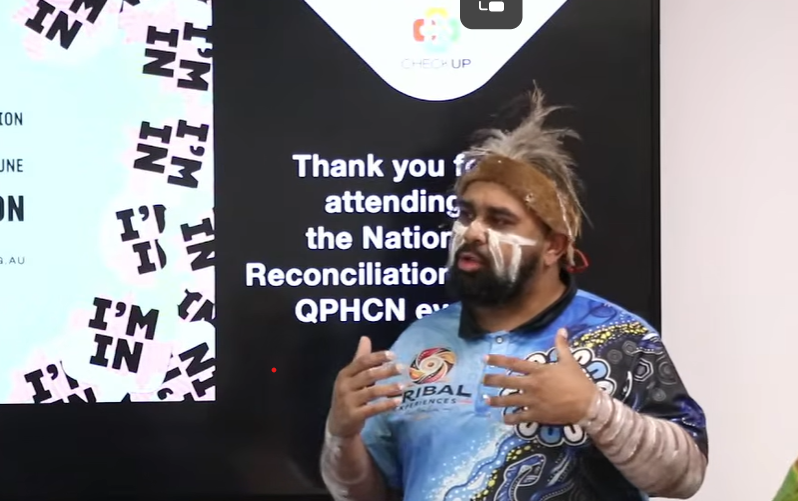
Joseph delivered the Welcome to Country and shared his knowledge
Joseph from Tribal Experiences opened the morning with a Welcome to Country on behalf of the Yuggera, Jagera and Turrbal nations, and took time to explain a distinction that many people in the room admitted they hadn’t fully understood before. An Acknowledgement of Country can be given by anyone, at any event. A Welcome to Country is different. It comes from a Traditional Owner, carries thousands of years of protocol, and is not something that can simply be arranged at short notice.
He spoke about the message stick, known in language as “Yahweh,” which functioned like a passport between tribal groups, and about his grandfather Mukund, one of the last messenger men for the Yuggera tribe, who could speak up to 15 different languages across south-east Queensland. It was a grounding way to open the day, a reminder that the protocols we observe at events like this one have deep meaning.
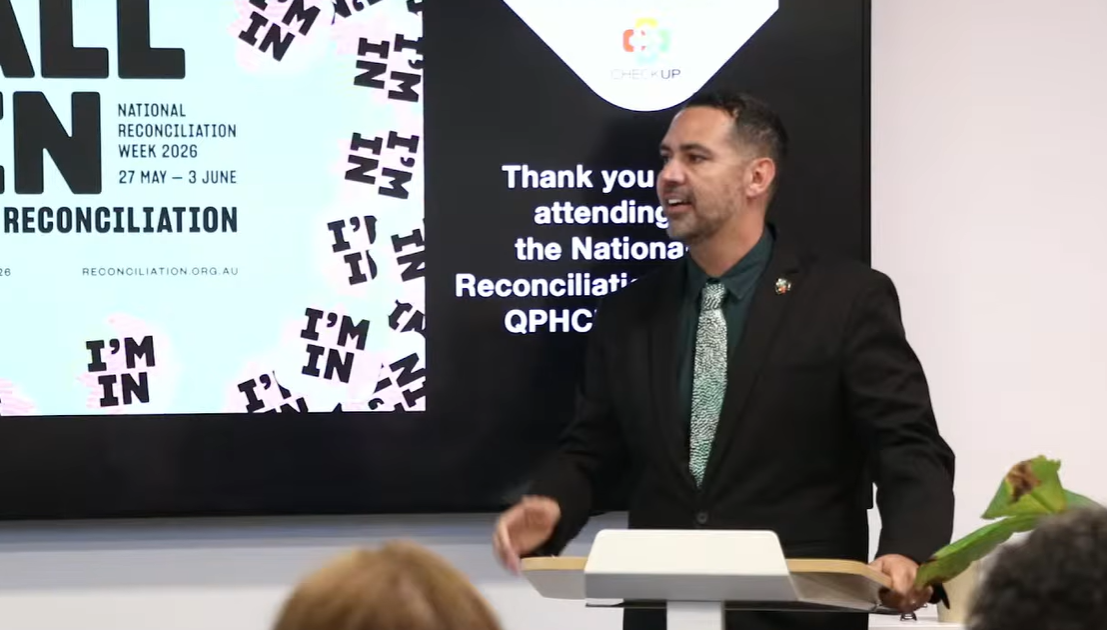
MC Kieran Chilcott, CEO of Kalwun Development Corporation and CheckUP Board Director, opened with a reflection on the 1967 referendum that grounded everything that followed. He pointed out that 59 years is within living memory, and that the freedoms Aboriginal and Torres Strait Islander people now hold as basic rights were denied within that time.
“That’s 59 years ago that this anniversary exists. So one generation above me, we were living in a time where Aboriginal and Torres Strait Islander people couldn’t choose who they would like to marry, choose where they want to live, choose to travel, be afforded equal wages.”
He also challenged the room on how they think about their role in reconciliation, moving away from the language of allyship toward something with more weight to it.
“Many people call them allies. I call them accomplices.”
Helena Wright shared her journey and valuable insights
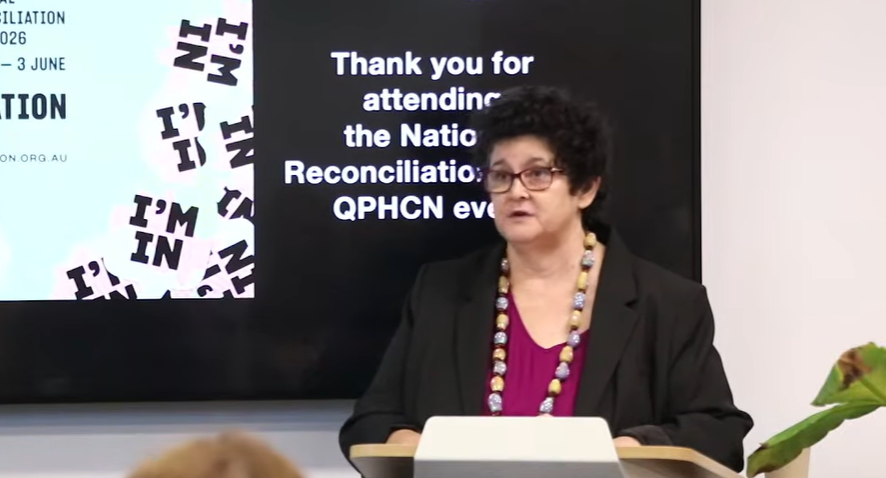
Helena Wright, Board Director of Reconciliation Queensland and deputy CEO of the Queensland Aboriginal and Torres Strait Islander Child Protection Peak, delivered the keynote. She spoke directly to the tension that many organisations in the room will recognise: the pressure to demonstrate action and report outcomes, alongside the reality that genuine reconciliation moves at a different pace.
“Meaningful change only happens at the speed of trust and at the community’s pace. Trust can’t be legislated, it can’t be purchased, and it certainly can’t be rushed. Trust is built through consistency. It’s built when people listen before they speak, when organisations honour their commitments, and when leaders continue to engage even when the conversations become difficult.”
On truth telling, she was clear that it is not about assigning blame but about building the shared understanding that makes genuine progress possible.
“In the health sector, truth telling means acknowledging that Aboriginal and Torres Strait Islander peoples have not always experienced health systems as a place of safety, trust and respect.”
And on cultural safety, she was emphatic that it is an organisation-wide responsibility, not something that sits with a single team or a policy document.
“Cultural safety is not a checklist. It’s about an experience. It’s reflected in whether people feel respected as soon as they walk through the door, and whether they feel safe enough to come back.”
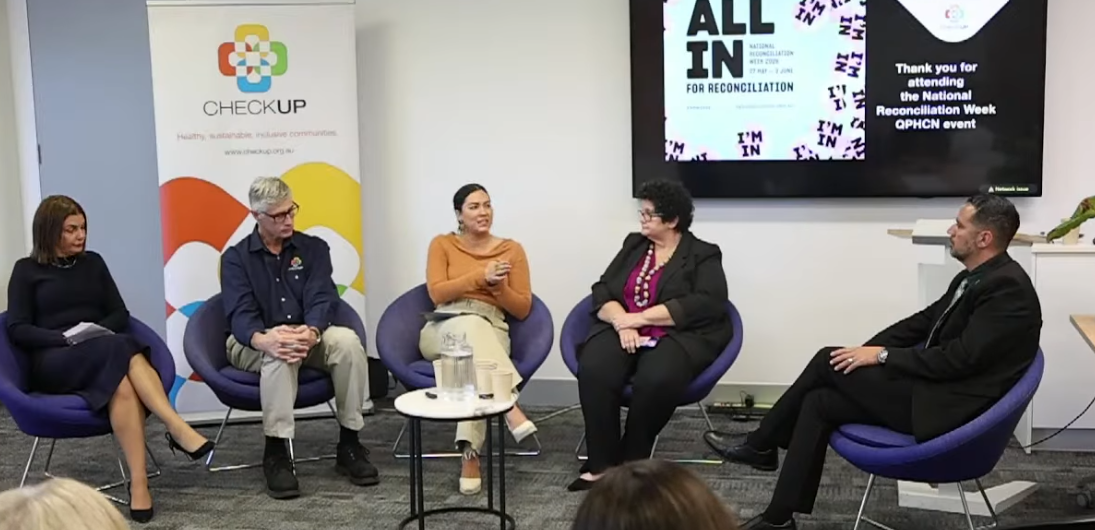
The panel brought together Karen Hale-Robertson (CEO, Open Minds), Tony de Ambrosis (CEO, CheckUP), Meena Waller (COO, Cancer Council Queensland) and Helena Wright, with Kieran Chilcott drawing out some of the most practical thinking of the day.
On what ALL IN actually means day to day
Karen Hale-Robertson framed it around truth telling and active listening, and the willingness to correct misunderstandings in the moment, even when it’s uncomfortable to do so. She was pragmatic about why those misunderstandings happen in the first place.
“A lot of the time they’re not deliberate, they just haven’t taken the time to learn.”
For Tony de Ambrosis, the theme landed as a personal challenge and a call to action, a prompt to look at his own sphere of influence and ask what he could actually do.
“For me, ALL IN was a really good thing because it actually challenged my thinking. What am I doing to make a difference? It’s about the actions, what can I do in my sphere of influence.”
Meena Waller approached it through the lens of what she called “universal proportional” design, arguing that when organisations build systems and services with the most marginalised people genuinely in mind, the result is better for everyone who uses them.
“When we do it well, it’s a really exciting community place world to live in.”
The panel was asked what they wish organisations would stop doing. Karen Hale-Robertson pointed to the gap between visual gestures and actual practice: organisations that display First Nations artwork but whose day-to-day culture, hiring decisions and service design tell a different story.
“That tokenistic setting. It doesn’t go very deep at all.”
Meena Waller pushed further on the measurement of cultural safety, and who actually gets to define it.
“The only person that can tell you if their experience was a culturally safe one is the person that experienced it. Cultural humility is a mindset, not a badge.”
Responding to an audience question about young people, Kieran Chilcott described what he sees every week at the Aboriginal cultural centre his organisation runs on Burleigh Headland, where more than 8,000 students visit each year. Many of them come back with their families.
“These are non-Indigenous children who haven’t had much to do with Aboriginal and Torres Strait Islander culture, who are dragging mums and dads and families back in. The optimism there is because I get to see it and I feel it.”
If there was one thread running through the whole morning, it was that reconciliation is not a program with a completion date. It shows up in how organisations listen, who they hire, how their intake forms are written, and whether the people they serve feel genuinely safe when they arrive and safe enough to return. The theme ALL IN is a call for that kind of consistent, deliberate presence in the everyday work, not just during Reconciliation Week.
CheckUP’s reconciliation journey is ongoing. If you’d like to be part of it, find out how to become a supporter and help us continue this work across Queensland.
CheckUP celebrates 10 years as Visiting Optometrists Scheme fundholder
As the Visiting Optometrists Scheme celebrates 50 years of bringing eye care to rural and remote Australia, CheckUP reflects on its own decade of leadership in Queensland.Read more
20 January 2026
Kilkivan outreach provider retiring after 12 years of dedicated service
CheckUP recently attended a farewell event in Kilkivan for Dr Sandra Zeeman to celebrate over 12 years of providing Outreach GP services to the community. Dr Zeeman was instrumental in establishing this service back in 2013.Read more
11 November 2025
How local healthcare shared one Emerald family’s future for the better
In March 2024, ten-year old Summer’s world shifted in the Emergency Department at Emerald Hospital. Diagnosed with Type 1 Diabetes, Summer was airlifted by a CapRescue helicopter to Rockhampton.Read more
20 October 2025
CheckUP’s Health Industry Workforce Advisor brings workforce knowledge to the APNA Festival of Nursing
CheckUP’s Health Industry Workforce Advisor (IWA) Alina Khalid, had an insightful time at the APNA Festival of Nursing, connecting with health leaders from across the country. She explored exciting workforce models that are shaping the future of care, including team-based approaches and the use of AI in health.Read more
Our health services newsletter keeps you across what is happening in regional, rural and remote health across Queensland. In this edition we congratulate Goondir CEO Floyd Leedie on his Australian AM Award, say a fond thank you and farewell to Dr Harry after many years of specialist care on Thursday Island and break down what the expanded bulk-billing changes mean for rural practices.
The annual provider survey is open too, so if you deliver outreach services your feedback will help shape the year ahead. Have a read, and if you want it landing in your inbox each month, subscribe below.
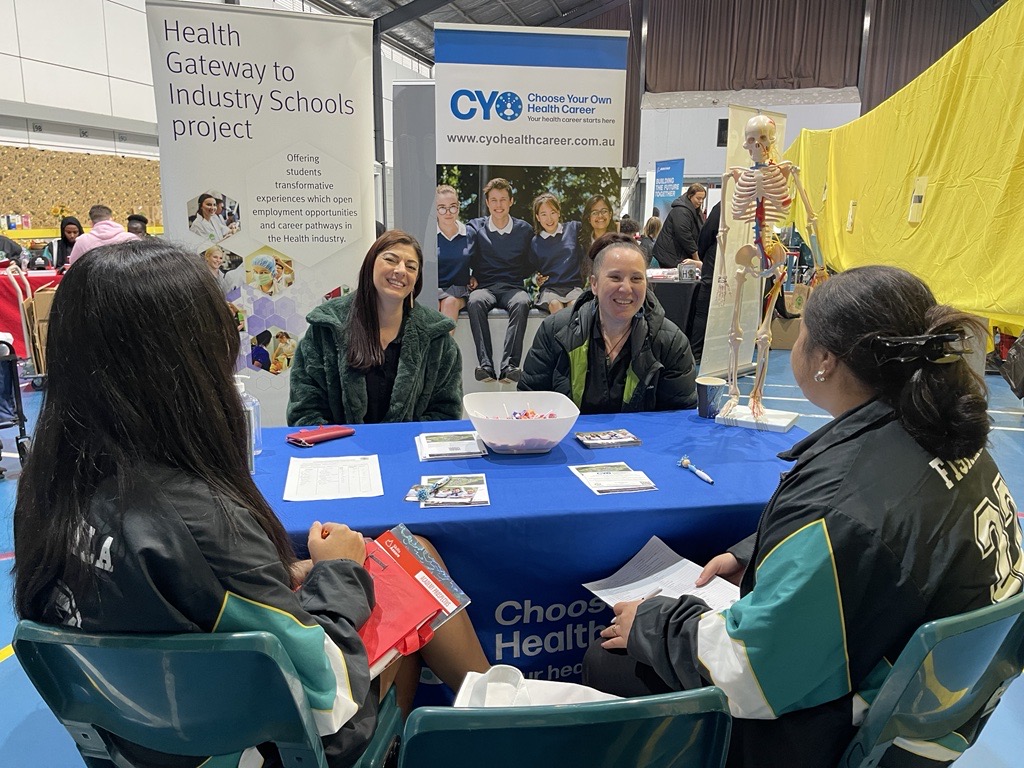
Sabrina has been part of the CheckUP team since June 2006. For the last 5 years she’s been helping the Queensland community as the Gateway Schools Manager. She works across the state to bridge the gap between secondary schools and the health industry, with a particular focus on regional, rural and remote communities.
The Gateway to Industry Schools program is proudly supported and funded by the Queensland Government.
Celebrating 20 years at CheckUP!
Why did you choose to apply for work at CheckUP?
Because of my passion in health and CheckUP’s clear commitment to improving health equity and strengthening the health sector, particularly for communities that need it most. I was also really interested in the diversity of work that CheckUP offered.
What does a typical day at work look like for you?
A typical day is quite varied and very people-focused. It usually involves working closely with schools, health services, tertiary education providers and industry partners to coordinate engagement activities such as industry exposure opportunities, events and pathway initiatives.
I spend a lot of time building and maintaining relationships, meeting with stakeholders, following up opportunities, problem-solving and aligning education needs with industry capacity. Alongside this, I manage planning, budgets and reporting to ensure the project stays on track and delivers meaningful outcomes for schools, students and industry partners. No two days are the same, but the common thread is connecting schools with industry to create practical pathways into the health sector.
How does your role contribute to rural and remote communities?
The Health Gateway Project is a statewide initiative and, in my role, I oversee the implementation of Health Gateway activities in regional, remote and rural Queensland. These communities often have fewer resources and less exposure to health career pathways, so bringing those opportunities directly to students where they live makes a real difference.
What’s the biggest transformation you see with people that you support?
Many students initially have a very narrow view of the health industry. They think of doctors and nurses, and little else. Watching that expand, seeing a student discover a role they had never heard of and realise it is something they could genuinely pursue, that shift in confidence and possibility is the transformation that matters most.
What’s your favourite part about CheckUP?
I love working with CheckUP because of the people and the culture. There is a genuine commitment to doing work that matters and a real sense of purpose across the organisation.
What’s the most rewarding part of your role?
Seeing students gain confidence, clarity and excitement about their future in health. When a student walks away from an experience knowing what they want to do and believing they can get there, that is everything.
What motivates you?
The tremendous interest and enthusiasm from schools and students to participate in the project. When you see how much young people want these opportunities, and how much schools want to offer them, it is hard not to feel motivated to keep pushing the work forward.
Sabrina’s advice
“Get out to the schools and communities. The relationships you build there are what make this work real. When students can see themselves in the roles you are showing them, that is when something shifts. That moment is worth everything.”
Stay across what’s happening in Queensland’s health and community services sector. Each edition brings together practical resources, funding opportunities, training updates and news from CheckUP’s programs, all in one place.
From workforce support for First Nations employers to free online training for Queensland businesses, CheckUP Connect is a straightforward way to stay informed and connected.
Subscribe below to receive the latest edition direct to your inbox.
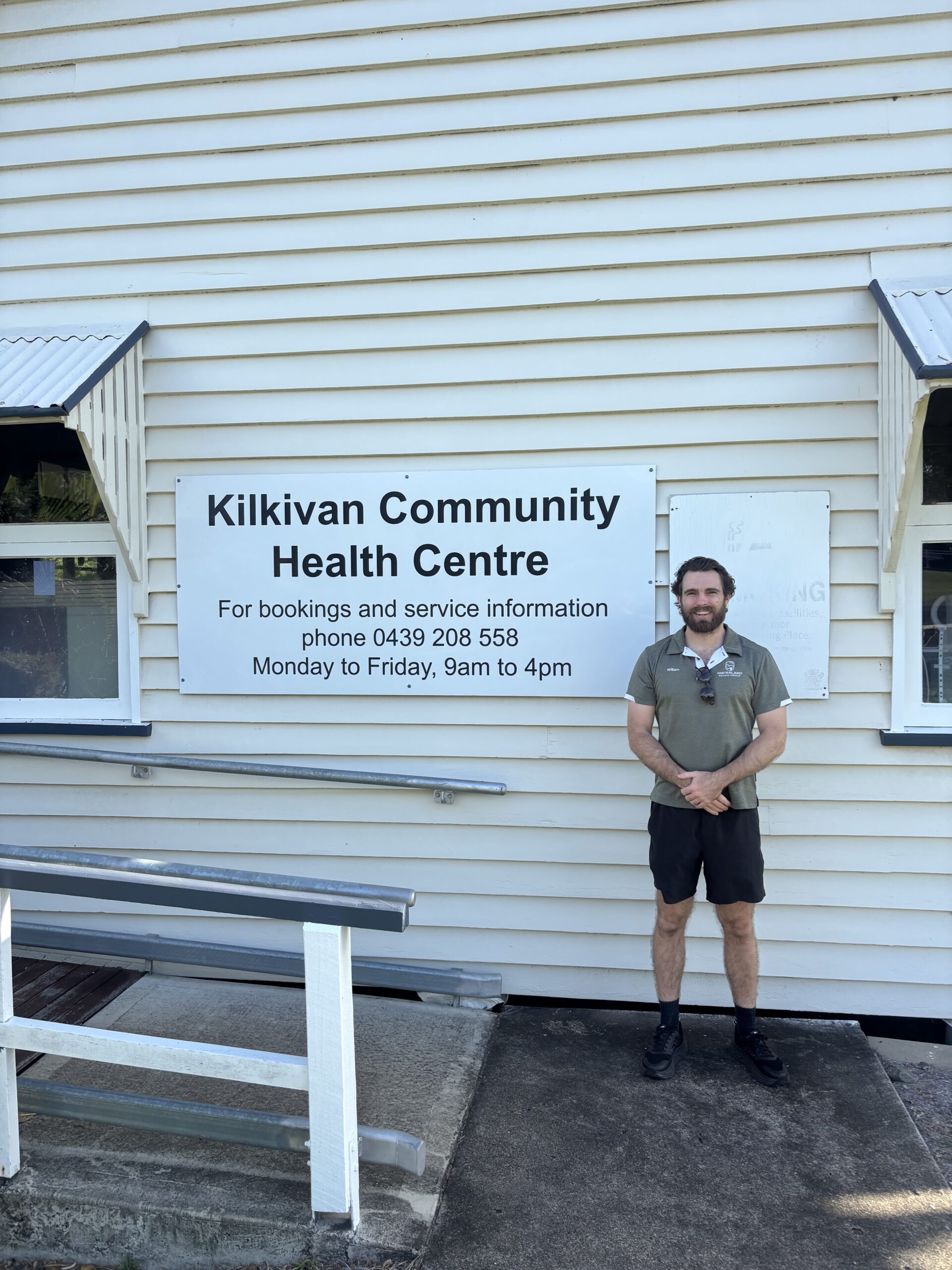
There’s a version of physiotherapy that happens in well-equipped city clinics, with referral networks a phone call away and specialists down the road. Then there’s Kilkivan.
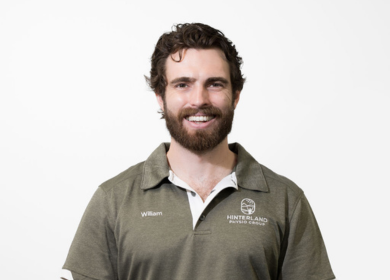
For William (Bill) Hinds, a physiotherapist from Hinterland Physio Group who has been doing outreach work in the small South East Queensland town for several years, the contrast couldn’t be sharper. And he wouldn’t trade it.
“The mix of patients you see in Kilkivan is quite varied. But the big difference is that you don’t have the same referral options available, so it pushes you to treat conditions that in a metro setting you might often refer on for.”
When the referral network is you
In a single day, Bill might develop an exercise program for a cardiovascular patient he’d normally refer to an exercise physiologist, complete an in-home assessment and order support aids that would typically involve an OT, and treat a vestibular (your body’s balance and spatial awareness system) patient he’d usually send to a specialist.
That breadth isn’t incidental to the work. It is the work.
Planning for the long game
One of the less obvious ways rural outreach reshapes clinical practice is in how you think about time. Bill and his team visit Kilkivan once a month, which means the standard week-to-week treatment rhythm simply doesn’t apply.
That kind of long-horizon planning, building a program a patient can sustain largely on their own between visits, is a skill that transfers directly back into everyday practice. It demands a level of patient education and self-management design that busy metro clinics don’t always require.
“This forces you to think differently with how you treat and plan for these patients, developing a plan on how to manage their condition not only over the next week, but also over the next month until we see them again.”
Creativity as a clinical skill
Limited resources have a way of sharpening thinking. In Kilkivan, the pools, gyms, recovery devices, and support networks that city-based clinicians take for granted are often unavailable or hard to access. That constraint, Bill says, is actually one of the most fulfilling parts of the work.
It’s a form of clinical creativity that doesn’t get taught in a textbook. The ability to problem-solve in real time, with what’s in front of you, for someone who has no other option.
“You are working in different environments, with limited resources to both you and the patient for their recovery. This forces you to think outside the box and work with the patient to figure out how we can help with the resources available.”
Showing up matters more than you think
Beyond the clinical skill-building, Bill speaks about something harder to measure but equally important: the power of simply being a consistent presence for patients in rural Queensland communities who have very few other options.
That reassurance sometimes extends well beyond physiotherapy. Patients raise things outside Bill’s scope, but he sees that as part of the role. Listening, and helping point them in the right direction.
In communities like Kilkivan, a health professional is rarely just a health professional. They’re often the most consistent point of contact the healthcare system offers.
“Often at rural clinics these patients are very isolated with very limited health professional support. For these patients, the knowledge that you are coming out to visit them on a set date is so powerful and gives so much reassurance to know they are not alone.”
Why hands-on still wins
With telehealth expanding rapidly across rural and regional Queensland, it’s worth asking what in-person Outreach offers that a video call can’t. For Bill, the answer is clear.
Telehealth has its place, he’s clear about that. But there are things that simply can’t happen through a screen.
“The benefits of being able to physically assess and treat a patient, giving them pain relief and increased movement or mobility in real time is far greater. We know from the evidence that this ability to be hands on and create benefit in session increases a patient’s compliance with their home exercise program and therefore improves patient outcomes.”
What he’d tell a younger physio
If a physiotherapist came to Bill wanting to fast-track their development, his advice would be direct.
“If you want to learn resilience, creativity, challenge yourself clinically, and find fulfilment in your work, then Outreach rural clinic work is the way to go. It will get you thinking on your feet, teach you to trust yourself and your clinical judgment, all while you will make real differences to people’s lives and the community.”
That combination of clinical growth and genuine community impact is what keeps practitioners like Bill making the drive to Kilkivan, month after month.
CheckUP celebrates 10 years as Visiting Optometrists Scheme fundholder
As the Visiting Optometrists Scheme celebrates 50 years of bringing eye care to rural and remote Australia, CheckUP reflects on its own decade of leadership in Queensland.Read more
20 January 2026
Kilkivan outreach provider retiring after 12 years of dedicated service
CheckUP recently attended a farewell event in Kilkivan for Dr Sandra Zeeman to celebrate over 12 years of providing Outreach GP services to the community. Dr Zeeman was instrumental in establishing this service back in 2013.Read more
11 November 2025
How local healthcare shared one Emerald family’s future for the better
In March 2024, ten-year old Summer’s world shifted in the Emergency Department at Emerald Hospital. Diagnosed with Type 1 Diabetes, Summer was airlifted by a CapRescue helicopter to Rockhampton.Read more
20 October 2025
CheckUP’s Health Industry Workforce Advisor brings workforce knowledge to the APNA Festival of Nursing
CheckUP’s Health Industry Workforce Advisor (IWA) Alina Khalid, had an insightful time at the APNA Festival of Nursing, connecting with health leaders from across the country. She explored exciting workforce models that are shaping the future of care, including team-based approaches and the use of AI in health.Read more
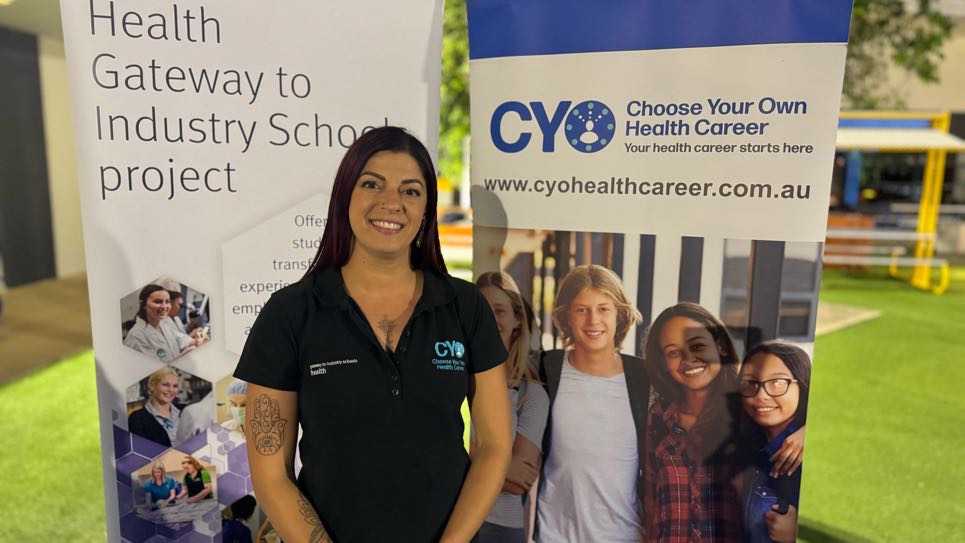
Lilli covers one of Queensland’s most geographically challenging regions, coordinating outreach health services across Far North Queensland (FNQ). Since joining CheckUP in June 2024, she’s become the essential link between providers, hospitals, Aboriginal Community Controlled Health Oranisation (ACCHO)s, and the communities they serve.
My role
Why did you choose to apply for work at CheckUP?
Because I loved the opportunity to travel and engage with communities, which I am very passionate about making a difference in small ways.
What does a typical day at work look like for you?
My typical day at work involves:
Checking phone messages and attending to urgent emails
Reviewing the Outreach Dashboard (OR reports, visit dates, etc.)
Attending Teams meetings and making calls
I continue with addressing any outstanding needs with providers and Hospital and Health Service (HHS), checking overall provider performance, and reading clinician notes. I reach out via call or email to assist outreach services that are struggling or need external support to deliver care.
How does your role contribute to rural and remote communities?
My role contributes through collaboration, engagement, and building trust within communities—including hospitals, ACCHOs, North Queensland Primary Healthcare Network (NQPHN), and partners like NDIS and Aged Care teams. By working across a diversified workforce, we achieve health targets and contribute immensely toward closing health gaps.
What’s the biggest transformation you see with people that you support?
The biggest transformation is seeing that they no longer have to leave their families to travel long distances for services, witnessing the smiles on their faces, and having the community acknowledge our work.
What’s your favourite part about CheckUP?
My role as Regional Coordinator FNQ. CheckUP gave me the opportunity and flexibility to own my role and work collaboratively with stakeholders, providers, and clients to deliver health services.
What’s the most rewarding part of your role?
Making a difference in the community through the delivery of priority needs with the support of outreach teams—bringing better healthcare closer to home.
Lilli’s advice for people considering rural support work
“Do not come with set expectations. Be flexible, have patience, and be able to build trust. Listen and learn about the people, adopt an open-minded approach, and be cheerful. Every location has a unique approach, but just be who you are—you are there to deliver the service and care for the community.”
CheckUP celebrates 10 years as Visiting Optometrists Scheme fundholder
As the Visiting Optometrists Scheme celebrates 50 years of bringing eye care to rural and remote Australia, CheckUP reflects on its own decade of leadership in Queensland.Read more
20 January 2026
Kilkivan outreach provider retiring after 12 years of dedicated service
CheckUP recently attended a farewell event in Kilkivan for Dr Sandra Zeeman to celebrate over 12 years of providing Outreach GP services to the community. Dr Zeeman was instrumental in establishing this service back in 2013.Read more
11 November 2025
How local healthcare shared one Emerald family’s future for the better
In March 2024, ten-year old Summer’s world shifted in the Emergency Department at Emerald Hospital. Diagnosed with Type 1 Diabetes, Summer was airlifted by a CapRescue helicopter to Rockhampton.Read more
20 October 2025
CheckUP’s Health Industry Workforce Advisor brings workforce knowledge to the APNA Festival of Nursing
CheckUP’s Health Industry Workforce Advisor (IWA) Alina Khalid, had an insightful time at the APNA Festival of Nursing, connecting with health leaders from across the country. She explored exciting workforce models that are shaping the future of care, including team-based approaches and the use of AI in health.Read more