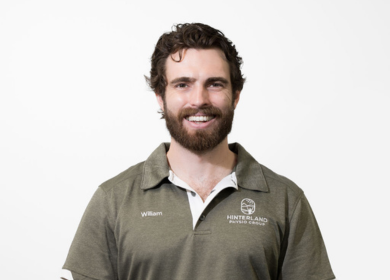
William (Bill) Hinds
Physiotherapist, Hinterland Physio Group
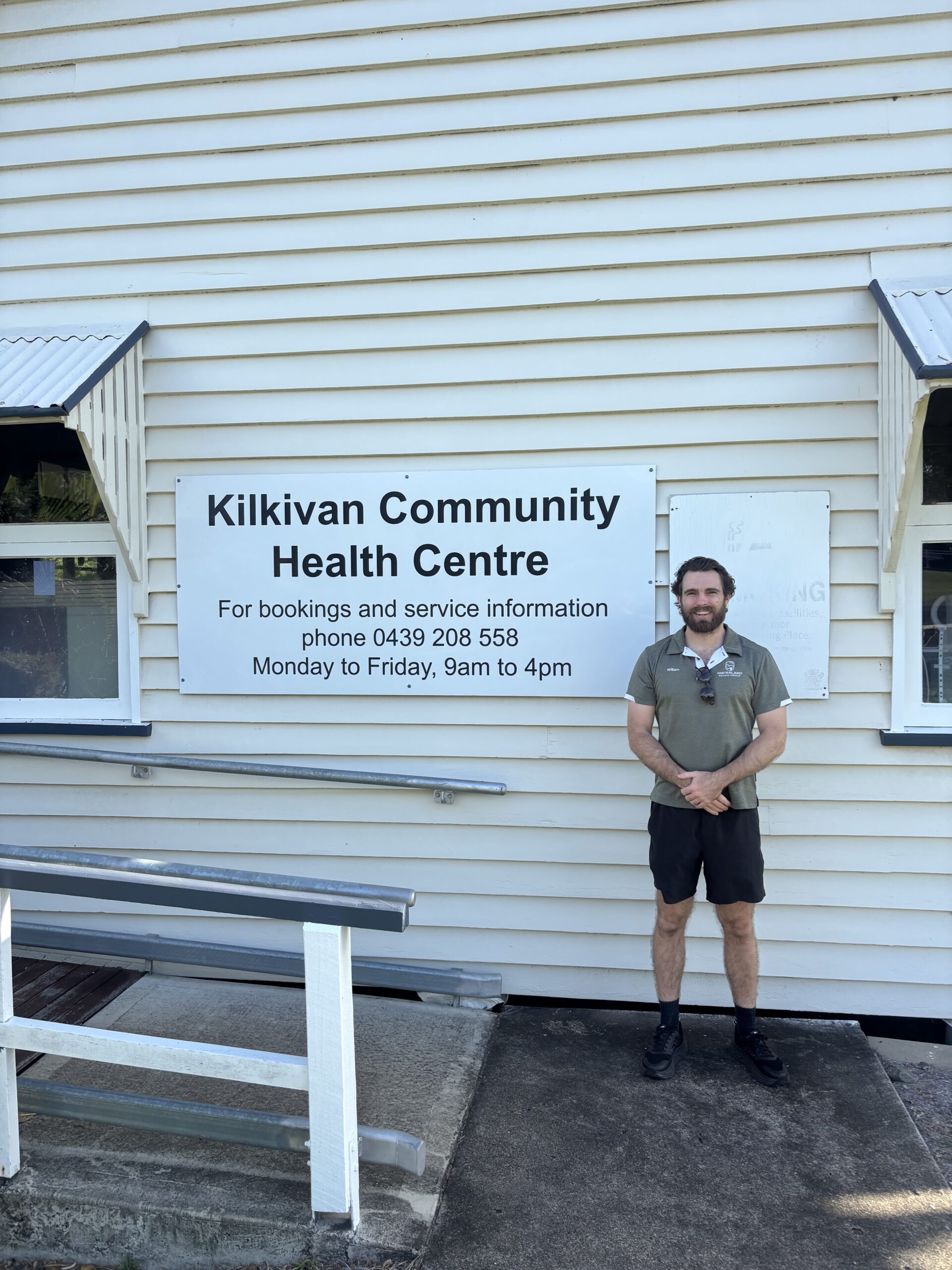
There’s a version of physiotherapy that happens in well-equipped city clinics, with referral networks a phone call away and specialists down the road. Then there’s Kilkivan.
For William (Bill) Hinds, a physiotherapist from Hinterland Physio Group who has been doing outreach work in the small South East Queensland town for several years, the contrast couldn’t be sharper. And he wouldn’t trade it.
“The mix of patients you see in Kilkivan is quite varied. But the big difference is that you don’t have the same referral options available, so it pushes you to treat conditions that in a metro setting you might often refer on for.”
When the referral network is you
In a single day, Bill might develop an exercise program for a cardiovascular patient he’d normally refer to an exercise physiologist, complete an in-home assessment and order support aids that would typically involve an OT, and treat a vestibular (your body’s balance and spatial awareness system) patient he’d usually send to a specialist.
That breadth isn’t incidental to the work. It is the work.
Planning for the long game
One of the less obvious ways rural outreach reshapes clinical practice is in how you think about time. Bill and his team visit Kilkivan once a month, which means the standard week-to-week treatment rhythm simply doesn’t apply.
That kind of long-horizon planning, building a program a patient can sustain largely on their own between visits, is a skill that transfers directly back into everyday practice. It demands a level of patient education and self-management design that busy metro clinics don’t always require.
“This forces you to think differently with how you treat and plan for these patients, developing a plan on how to manage their condition not only over the next week, but also over the next month until we see them again.”
Creativity as a clinical skill
Limited resources have a way of sharpening thinking. In Kilkivan, the pools, gyms, recovery devices, and support networks that city-based clinicians take for granted are often unavailable or hard to access. That constraint, Bill says, is actually one of the most fulfilling parts of the work.
It’s a form of clinical creativity that doesn’t get taught in a textbook. The ability to problem-solve in real time, with what’s in front of you, for someone who has no other option.
“You are working in different environments, with limited resources to both you and the patient for their recovery. This forces you to think outside the box and work with the patient to figure out how we can help with the resources available.”
Showing up matters more than you think
Beyond the clinical skill-building, Bill speaks about something harder to measure but equally important: the power of simply being a consistent presence for patients in rural Queensland communities who have very few other options.
That reassurance sometimes extends well beyond physiotherapy. Patients raise things outside Bill’s scope, but he sees that as part of the role. Listening, and helping point them in the right direction.
In communities like Kilkivan, a health professional is rarely just a health professional. They’re often the most consistent point of contact the healthcare system offers.
“Often at rural clinics these patients are very isolated with very limited health professional support. For these patients, the knowledge that you are coming out to visit them on a set date is so powerful and gives so much reassurance to know they are not alone.”
Why hands-on still wins
With telehealth expanding rapidly across rural and regional Queensland, it’s worth asking what in-person Outreach offers that a video call can’t. For Bill, the answer is clear.
Telehealth has its place, he’s clear about that. But there are things that simply can’t happen through a screen.
“The benefits of being able to physically assess and treat a patient, giving them pain relief and increased movement or mobility in real time is far greater. We know from the evidence that this ability to be hands on and create benefit in session increases a patient’s compliance with their home exercise program and therefore improves patient outcomes.”
What he’d tell a younger physio
If a physiotherapist came to Bill wanting to fast-track their development, his advice would be direct.
“If you want to learn resilience, creativity, challenge yourself clinically, and find fulfilment in your work, then Outreach rural clinic work is the way to go. It will get you thinking on your feet, teach you to trust yourself and your clinical judgment, all while you will make real differences to people’s lives and the community.”
That combination of clinical growth and genuine community impact is what keeps practitioners like Bill making the drive to Kilkivan, month after month.