What it really means to be ALL IN for reconciliation in health
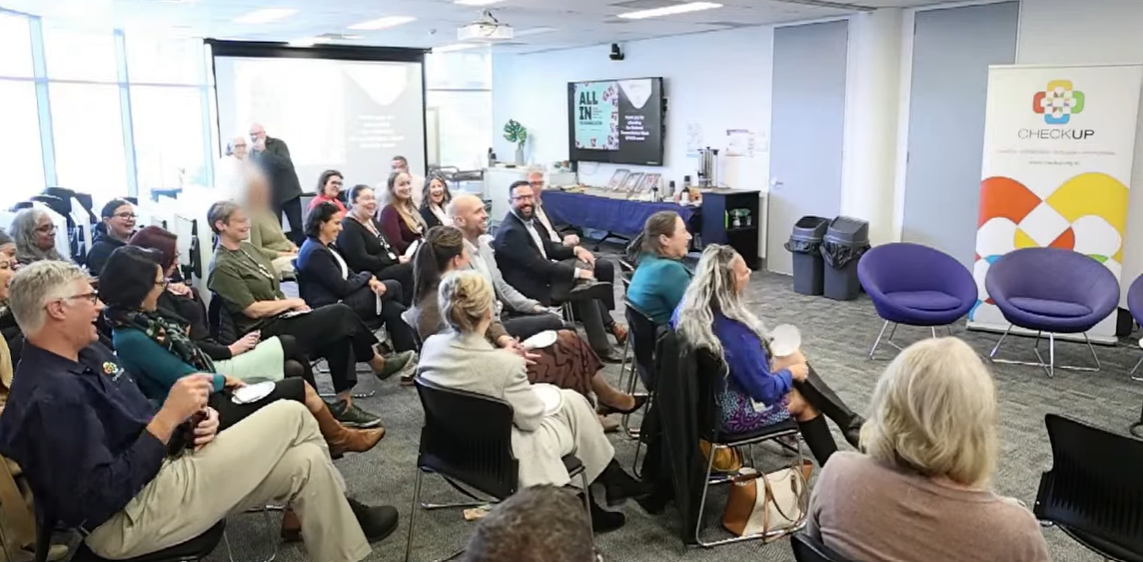
Each year, National Reconciliation Week invites us back into conversations that help strengthen understanding and connection across our communities. These conversations are necessary. At the National Reconciliation Week 2026 CheckUP QPHCN event, a room full of health, workforce, community services professionals and supporters sat with this year’s theme: ALL IN. This event was held in person and also streamed live to participants across Queensland. The conversations that followed were honest, practical, and at times challenging in ways that prompted deeper reflection and motivated more deliberate action.
CheckUP extends our sincere thanks to speakers for generously sharing their wisdom, personal experiences and also insights into actions we can take as individuals and as a larger collective.
The speakers who shared with us were:
- Joseph, Tribal Experiences, who delivered the Welcome to Country
- Kieran Chilcott, MC, CEO of Kalwun Development Corporation and CheckUP Board Director
- Helena Wright, keynote speaker, Board Director of Reconciliation Queensland
- Karen Hale-Robertson, CEO of Open Minds
- Tony de Ambrosis, CEO of CheckUP
- Meena Waller, COO of Cancer Council Queensland
59
years ago
The 1967 referendum gave Aboriginal and Torres Strait Islander people the right to be counted in the national census. The anniversary falls on 27 May, the first day of National Reconciliation Week.
The difference between a Welcome to Country and an Acknowledgement of Country
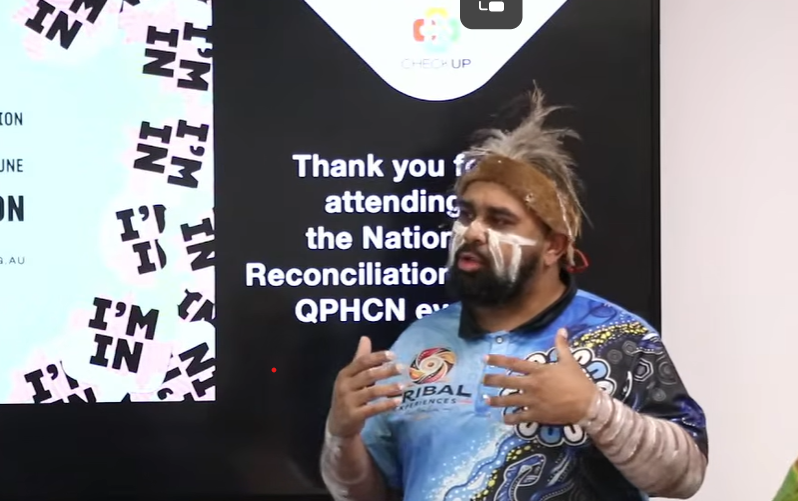
Joseph delivered the Welcome to Country and shared his knowledge
Joseph from Tribal Experiences opened the morning with a Welcome to Country on behalf of the Yuggera, Jagera and Turrbal nations, and took time to explain a distinction that many people in the room admitted they hadn’t fully understood before. An Acknowledgement of Country can be given by anyone, at any event. A Welcome to Country is different. It comes from a Traditional Owner, carries thousands of years of protocol, and is not something that can simply be arranged at short notice.
He spoke about the message stick, known in language as “Yahweh,” which functioned like a passport between tribal groups, and about his grandfather Mukund, one of the last messenger men for the Yuggera tribe, who could speak up to 15 different languages across south-east Queensland. It was a grounding way to open the day, a reminder that the protocols we observe at events like this one have deep meaning.
The history that’s closer than we think
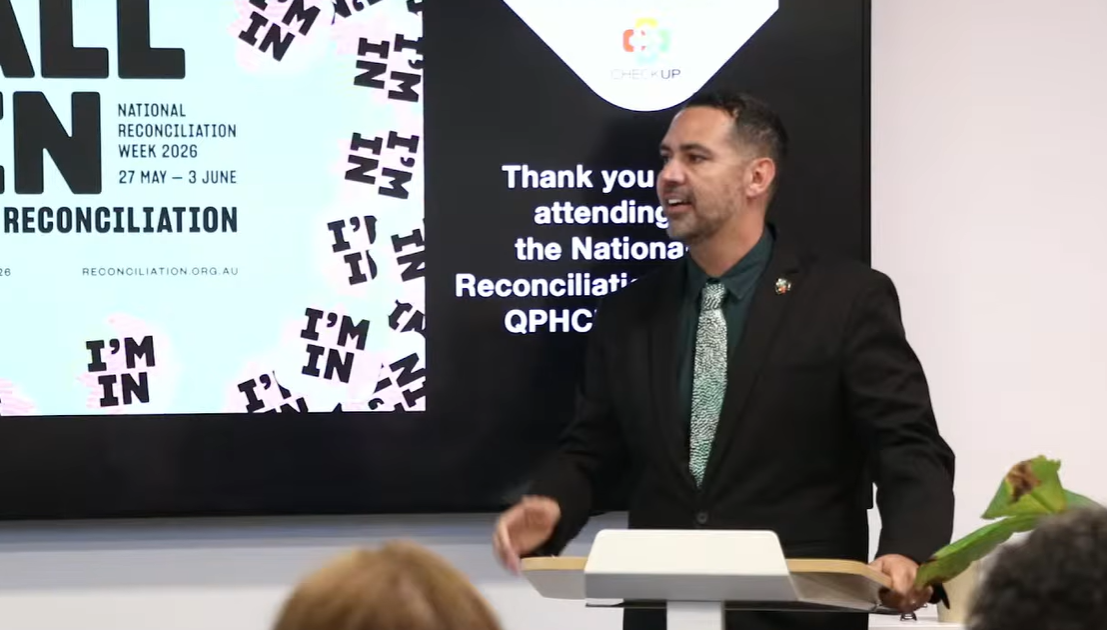
Kieran Chilcott is pictured above
MC Kieran Chilcott, CEO of Kalwun Development Corporation and CheckUP Board Director, opened with a reflection on the 1967 referendum that grounded everything that followed. He pointed out that 59 years is within living memory, and that the freedoms Aboriginal and Torres Strait Islander people now hold as basic rights were denied within that time.
“That’s 59 years ago that this anniversary exists. So one generation above me, we were living in a time where Aboriginal and Torres Strait Islander people couldn’t choose who they would like to marry, choose where they want to live, choose to travel, be afforded equal wages.”
Kieran Chilcott, MC
He also challenged the room on how they think about their role in reconciliation, moving away from the language of allyship toward something with more weight to it.
“Many people call them allies. I call them accomplices.”
Kieran Chilcott, MC
Trust cannot be rushed
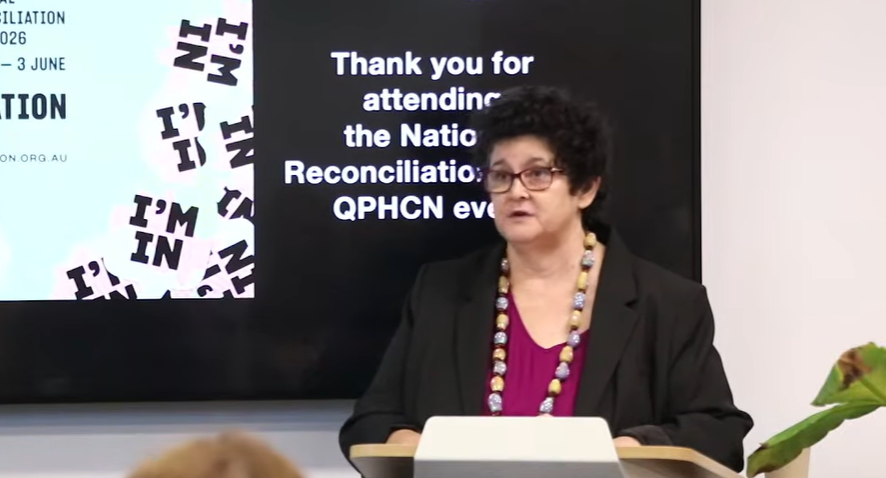
Helena Wright shared her journey and valuable insights
Helena Wright, Board Director of Reconciliation Queensland and deputy CEO of the Queensland Aboriginal and Torres Strait Islander Child Protection Peak, delivered the keynote. She spoke directly to the tension that many organisations in the room will recognise: the pressure to demonstrate action and report outcomes, alongside the reality that genuine reconciliation moves at a different pace.
“Meaningful change only happens at the speed of trust and at the community’s pace. Trust can’t be legislated, it can’t be purchased, and it certainly can’t be rushed. Trust is built through consistency. It’s built when people listen before they speak, when organisations honour their commitments, and when leaders continue to engage even when the conversations become difficult.”
Helena Wright, keynote speaker
On truth telling, she was clear that it is not about assigning blame but about building the shared understanding that makes genuine progress possible.
“In the health sector, truth telling means acknowledging that Aboriginal and Torres Strait Islander peoples have not always experienced health systems as a place of safety, trust and respect.”
Helena Wright, keynote speaker
And on cultural safety, she was emphatic that it is an organisation-wide responsibility, not something that sits with a single team or a policy document.
“Cultural safety is not a checklist. It’s about an experience. It’s reflected in whether people feel respected as soon as they walk through the door, and whether they feel safe enough to come back.”
Helena Wright, keynote speaker
What the panel said
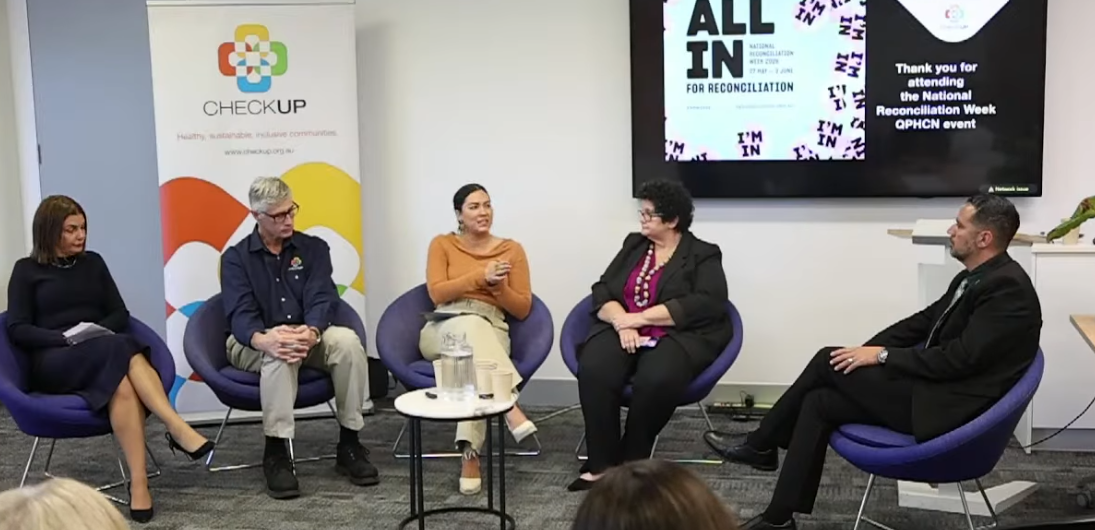
Attendees are pictured above
The panel brought together Karen Hale-Robertson (CEO, Open Minds), Tony de Ambrosis (CEO, CheckUP), Meena Waller (COO, Cancer Council Queensland) and Helena Wright, with Kieran Chilcott drawing out some of the most practical thinking of the day.
On what ALL IN actually means day to day
Karen Hale-Robertson framed it around truth telling and active listening, and the willingness to correct misunderstandings in the moment, even when it’s uncomfortable to do so. She was pragmatic about why those misunderstandings happen in the first place.
“A lot of the time they’re not deliberate, they just haven’t taken the time to learn.”
Karen Hale-Robertson, CEO Open Minds
For Tony de Ambrosis, the theme landed as a personal challenge and a call to action, a prompt to look at his own sphere of influence and ask what he could actually do.
“For me, ALL IN was a really good thing because it actually challenged my thinking. What am I doing to make a difference? It’s about the actions, what can I do in my sphere of influence.”
Tony de Ambrosis, CEO CheckUP
Meena Waller approached it through the lens of what she called “universal proportional” design, arguing that when organisations build systems and services with the most marginalised people genuinely in mind, the result is better for everyone who uses them.
“When we do it well, it’s a really exciting community place world to live in.”
Meena Waller, COO Cancer Council Queensland
On what’s not working
The panel was asked what they wish organisations would stop doing. Karen Hale-Robertson pointed to the gap between visual gestures and actual practice: organisations that display First Nations artwork but whose day-to-day culture, hiring decisions and service design tell a different story.
“That tokenistic setting. It doesn’t go very deep at all.”
Karen Hale-Robertson, CEO Open Minds
Meena Waller pushed further on the measurement of cultural safety, and who actually gets to define it.
“The only person that can tell you if their experience was a culturally safe one is the person that experienced it. Cultural humility is a mindset, not a badge.”
Meena Waller, COO Cancer Council Queensland
On what gives reason for optimism
Responding to an audience question about young people, Kieran Chilcott described what he sees every week at the Aboriginal cultural centre his organisation runs on Burleigh Headland, where more than 8,000 students visit each year. Many of them come back with their families.
“These are non-Indigenous children who haven’t had much to do with Aboriginal and Torres Strait Islander culture, who are dragging mums and dads and families back in. The optimism there is because I get to see it and I feel it.”
Kieran Chilcott, MC
What we’re taking forward
If there was one thread running through the whole morning, it was that reconciliation is not a program with a completion date. It shows up in how organisations listen, who they hire, how their intake forms are written, and whether the people they serve feel genuinely safe when they arrive and safe enough to return. The theme ALL IN is a call for that kind of consistent, deliberate presence in the everyday work, not just during Reconciliation Week.
CheckUP’s reconciliation journey is ongoing. If you’d like to be part of it, find out how to become a supporter and help us continue this work across Queensland.