

Healthcare needs to put the humanity back into health
By Dr Dinesh Palipana OAM, emergency physician, lawyer and disability advocate
Despite the findings of the Disability Royal Commission, Australians with disability are still facing significant barriers when accessing healthcare. As someone who has experienced the system from both sides – as a clinician and as a person living with quadriplegia following a spinal cord injury – I can tell you that progress has been incremental at best.
Around one in five Australians live with disability[1], yet many continue to experience poorer health outcomes and greater barriers when accessing care. Adults with disability are 12 times more likely to rate their health as ‘fair’ or ‘poor’[2], while people under 65 using disability services are almost five times more likely to die compared to the general population[3].
These aren’t fringe statistics – they reflect a systemic gap in how the healthcare workforce is trained and prepared.
The Disability Royal Commission highlighted serious issues across the healthcare system, yet only a fraction of the recommendations were accepted by the federal government.
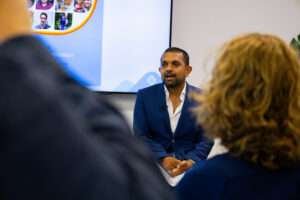
Dr Palipana is pictured above at the QPHCN event held during 2025 Disability Action Week
In my experience, one of the biggest challenges is that disability-specific training is rarely embedded in how healthcare professionals are educated. Disability takes many forms – physical, cognitive, sensory, psychosocial – and each brings its own complexities that clinicians simply aren’t consistently prepared for.
There are also the broader social challenges that many healthcare workers simply don’t see. Organising appointments, travelling to clinics and navigating inaccessible spaces are examples. For someone living with disability, these aren’t minor inconveniences – they’re barriers that make the difference between accessing care and avoiding it altogether.
I’ve witnessed this firsthand. I once supported a person with quadriplegia who needed a scan and had been searching for an accessible radiology clinic. Within a 150-kilometre radius covering millions of people, they could find just one clinic willing and able to accommodate them – and it was over an hour away. Since then, my mum has been affected by breast cancer, so the importance of accessible radiological screening has become even more personal to me.
As the great educator Sydney J. Harris once said, “the whole purpose of education is to turn mirrors into windows.” That’s exactly what disability awareness training can do for healthcare. The healthcare workforce is disproportionately made up of people without disability – and to truly understand the experience of those we care for, we have to be willing to look beyond our own frame of reference.
The solution has to start at the ground up. Students and early-career healthcare professionals need disability awareness education because that’s what will shift culture over time. People with disability are more dependent on the healthcare system, experience worse outcomes and are often more vulnerable. Improving disability awareness isn’t just the right thing to do – it makes healthcare more equitable, efficient and safe.
That’s why I chaired the advisory group for CheckUP Australia’s Access for All, an online disability awareness course designed to help healthcare providers better understand and support people across a range of healthcare settings.
Since its launch, the course has shown promising results – a statistically significant improvement in disability awareness among participants, with 97 percent saying they intended to improve the accessibility of the services they provide.[4]
It’s a start. And I remain hopeful. Medicine has always had the power to transcend borders, prejudices and vulnerabilities – to make a real difference to fellow humans most in need. But to do that, we have to be willing to look honestly at where we’re falling short, and commit to doing better.
Healthcare needs to put the humanity back into health. Because often, it’s the human factors that make the biggest difference for people with disability.
Creating a more inclusive health system will require action from all of us. For healthcare professionals looking to strengthen their understanding of disability and improve the care they provide, Access for All offers a practical place to start. Every clinician, administrator and healthcare worker has the opportunity to make healthcare more accessible, equitable and welcoming for people with disability.
Thank you, Dr Dinesh Palipana | CheckUP would like to sincerely acknowledge and thank Dr Dinesh PalipanaOAM, emergency physician, lawyer and disability advocate for bringing this article to LinkedIn.
Start Access for All | Access for All is an online course that builds on the disability awareness and knowledge health providers already have. It’s self-paced and comes with 3 CPD points, recognised across 35+ professions.
Every dollar goes back into sustaining the program and growing its reach.
Access for All is proudly endorsed by Queensland Health and Dr Palipana.
[1] Australian Bureau of Statistics – 5.5 million Australians have disability
[2] Australian Institute of Health & Welfare – Australia’s Health: Health of people with disability
[3] Australian Institute of Health & Welfare – Mortality patterns among people using disability support service
[4] University of Melbourne – Evaluation of Access for All – Disability Awareness for Mainstream Health Providers