
Search

Search

Suggestions

Outreach programs

Membership

Health workforce

Health services

Online training

Provide feedback

Queensland Mental Health Week

Who we are

CheckUP works with partner organisations and health providers to create healthier communities and reduce health inequities through a range of initiatives.

View all

Partner with us

There are so many ways you can support the work of CheckUP and our vision of better health for the people and communities that need it most.

View all

News & publications

Read the latest news and publications from CheckUP.

View all

Grants available to support mental health events

Today (4 April 2022) a grant program totaling $100,000 has been launched to support Queensland Mental Health Week events that raise community awareness, foster belonging, and create connections.

Queensland Mental Health Week will take place between 8-16 October, providing an opportunity to promote positive mental health and wellbeing, reduce the stigma associated with mental illness, and celebrate the contribution of the mental health and community sectors.

This year’s new theme ‘Awareness, Belonging, Connection’, reflects the important factors that help people maintain their mental health and wellbeing.

School P&Cs, community organisations, businesses, and councils across the state, from Cape York to the Gold Coast, are being called on to start planning events and activities to celebrate the week, incorporating the theme. Individual grants of $500, $1000, or $3000 are available to eligible organisations to support these events through funding provided by the Queensland Mental Health Commission and administered by CheckUP.

Queensland Mental Health Commissioner Ivan Frkovic said the Queensland Mental Health Week Community Events Grant Program contributes toward increased knowledge of mental health and connection among people and communities.

“These grants help increase the capacity of local communities to host events during the week that provide a focal point for awareness, education and understanding, and foster connection and inclusion for those living with mental illness, their families, carers and support people,” Mr Frkovic said.

Mr Frkovic said one in every five Queenslanders was likely to experience some form of mental illness every year.

“Many Queensland communities have recently experienced loss and distress as a result of the floods, compounded by a challenging couple of years caused by the COVID-19 pandemic,” Mr Frkovic said.

“This makes increased community awareness and understanding more important than ever.”

“We need to ensure that people know where to get help when they need it, and that we focus on those things that sustain and maintain our mental wellbeing, to act as a buffer when life is challenging.”

CheckUP CEO Ann Maree Liddy said while Queensland Mental Health Week events had a serious education and awareness purpose, they were also an expression of diverse and inclusive communities.

“The calibre and creativity of last year’s events were incredible, and we can’t wait to see the positive social activities that communities come up with to attract involvement, build resilience at the local level, and help people to feel connected,” Ms Liddy said.

“Featuring two grant rounds – a Community Grant Round and Youth Grant Round – the grant program focuses on supporting broad community wellbeing initiatives, as well as promoting social inclusion for at-risk communities.

“The funding will enable communities to host more informative and effective events, offsetting event expenses such as engaging specialists for seminars or purchasing workshop supplies.”

Ms Liddy said CheckUP hoped to see grant applications come in from every corner of the state, urging organisations in regional, rural, and remote communities to apply.

Grant applications for the Community Grant Round close on Friday 6 May and applications for the Youth Grant Round close on Friday 13 May.

For more information visit www.qldmentalhealthweek.org.au.

For 24/7 crisis support, call Lifeline on 13 11 14, or the Suicide Call Back Service on 1300 659 467. In an emergency, call 000.

Media enquiries:

CheckUP, Lisa Maynard, lmaynard@checkup.org.au, 07 3105 8308
QMHC, Kate Southwell, kate.southwell@qmhc.qld.gov.au, 0409 275 385

About the theme

Awareness is about understanding the things we need to maintain and boost our mental wellbeing and knowing when we need to reach out for help and where to get it.

Belonging is about looking out for each other, ensuring we feel safe and supported, and understanding that however we feel, we’re not alone, and that there are others going through the same thing.

Connection is about our relationships with our friends, families, and those that we care about, as well as the groups, clubs, and networks around us that we rely on to help keep us happy and healthy, wherever we live, work, or play.

About the grant program

 The 2022 Queensland Mental Health Week Community Events Grant Program is a competitive, application-based grant program that features two grant rounds.

(1) Community Grant Round – open to a diverse range of applications

  • Grant amounts available: $3000, $1000, or $500

(2) Youth Grant Round – for events targeted to young people (aged 21 and under)

  • Grant amounts available: $1000 or $500

More information about the grant program is available at https://www.qldmentalhealthweek.org.au/grants/.


Safe media reporting

Visit the Mindframe website at www.mindframe.org.au for advice on how to support safe media reporting, portrayal, and communication about suicide, mental ill-health, and problematic alcohol and other drug use.
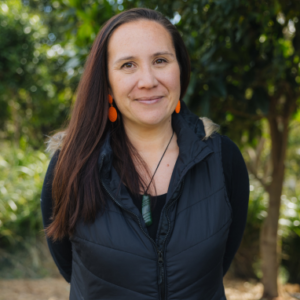
Meet our team: Kat Murray

Based out of CheckUP’s Brisbane office, Kat Murray has worked at CheckUP since January 2008. Her primary role now involves being the project manager for schools and industry in the Metro North and the Sunshine Coast regions for our Health Gateway to Industry Schools program. Kat Murray

Learn more about Kat and the work she engages in at CheckUP by reading the below Q&A.

For more information on Health Gateway to Industry Schools, visit https://gateway2health.com.au/.

What were you doing prior to coming to CheckUP?

Prior to commencing at CheckUP 14 years ago, I briefly worked at the Central Queensland Rural Division of General Practice in Biloela. When I relocated back to Brisbane, I was fortunate enough to secure a position at the then General Practice Queensland.

What does a typical day look like for you?

It’s hard to describe a typical day because my days are all so different. I have recently moved from the Communications team where I would work across the organisation often liaising with many of my colleagues throughout the day into the Gateway team. Now, I work closely with other members of the Gateway team. I am the main point of contact for the eleven schools within my region, Metro North Brisbane, so I am in regular contact with them too. Some days I might attend a school for the signing of a new Memorandum of Understanding, or I may attend a Careers Expo to promote the program. I really enjoy the opportunity to meet teachers, students and their parents and share with them information about the program. I also work with the Access for All team assisting with resource development, website updates as well as eNews updates. I am also a member of our RAP Workgroup and the CheckUP Shine Wellness Workgroup. So, I could also be meeting with fellow colleagues or working with them on actions arising from those meetings.

What aspect of your role do you enjoy the most?

In my previous position within the Communications team, I really enjoyed travelling out into the community and meeting the people who our services make a difference for. I loved seeing the smiles on the children’s faces when we gave them their care packs and getting to know elders who can now see clearly again.

I’ve recently commenced a new position within the Gateway team, and I am so exciting to get out and about to meeting more of the next generation of health professionals!

What are three words you would use to describe CheckUP?

Flexible, purposeful, and caring

What activities do you enjoy when you’re not working? 

I love spending time with my family and friends during my down time. I also love making earrings, listening to music, taking my children on bushwalks through the local bushland or to the beach and travelling (although that has been limited for the past two years).

Who did you last listen to when you drove/flew somewhere? 

I have a ‘labour’ playlist on my phone from when I had my youngest daughter and that is always playing in the car. There is a huge range on that playlist from Bob Marley to Metallica and Tupac to Fleetwood Mac. Sometimes I’ll listen to a podcast if I’m on a long trip without the kids. If it’s not either of those it’s usually the Wiggles thanks to our youngest or Astronaut in the Ocean thanks to our eldest.

Is there anything else you would like to add?

I have loved working at CheckUP and am so grateful for all the amazing friendships I have made over the past 14 years. I have travelled to the far reaches of the state and met some truly amazing people.


Meet our team: Cassandra French

CheckUP’s Regional Coordinator for Central and Central West Queensland Cassandra French’s passion for rural and remote health comes from her childhood, growing up in the Northern Territory.

“Health has always been an area of interest of mine, stemming from my nutrition subjects back in school, which led me into the preventative health and early intervention space,” she said.

“I started my career living and working in rural and remote Queensland as a health promotion officer, and then moved back to Brisbane for family reasons where I worked for a PHN in the child and youth mental health space.”

Cassie has been an integral part of the CheckUP team for the past 18 months. She loves being involved in work that helps increase access to health services and creates sustainable outcomes for all.

Learn more about Cassie and the work she engages in at CheckUP by reading the below Q&A. Want to get in touch with our Outreach team? Email outreachservices@checkup.org.au.

What does a typical day look like for you?

The days vary – which I enjoy in this role. There are changes in Outreach all the time. Due to the COVID-19 pandemic, our travel has been limited, but I’m looking forward to getting back out and about to chat with people face-to-face as that is the best way to understand what is happening on the ground.

What aspect of your role do you enjoy the most?

The ability to make a difference to communities on the ground, as a network. I really enjoy engaging with community, service providers and other stakeholders to problem solve and design sustainable solutions. I love working and learning from others who are passionate about rural and remote health too – and getting out to experience these areas firsthand.

What are three words you would use to describe CheckUP? 

Collaborative. Adaptable. Welcoming.

What activities do you enjoy when you’re not working? 

I am loving getting into yoga, walking our two (energetic) dogs and doing all things to do with building our new house! I can’t wait to get our veggie garden started.

I love listening to a good podcast on the topics of health, wellness, or personal development.

Outreach services helping meet health needs in Northern Peninsula Area

Many communities in rural and remote Queensland, like those within the Northern Peninsula Area (NPA), don’t have easy access to health services.

By increasing communities’ access to medical specialist, GP, and allied health services, through the coordination of Outreach health services, CheckUP aims to reduce patients’ need to travel long distances to attend a consultation or receive treatment.

CheckUP and Northern Peninsula Area Family and Community Services have been working closely to ensure community needs are met, with a range of Outreach service providers visiting the area, including most recently, a podiatrist, physiotherapist, and exercise physiologist.

NPA Family and Community Services Program Manager for Clinical Health Services Karyn Sam said these additional allied health services have provided accessible and quality of care to the people of NPA.

“Diabetics have been able to access an annual diabetic foot check, which is in line with evidence-based practice,” she said.

“This has been reassuring to the clients and the service; knowing that we are delivering holistic care approach is fantastic.”

Ms Sam said they had received a range of positive feedback from clients about the visiting service providers, with comments including, “we don’t have to be on a waiting list” and “our needs are attended to sooner rather than later”.

“NPAFACS considers this feedback as excellent, as it is our priority to ensure that health needs are addressed effectively and in a timely manner,” she said.

“Thank you CheckUP for the funding allocation to provide relevant services to the NPA.”

The Outreach program is made possible through funding from the Australian Department of Health.

Student helps future-proof allied health workforce

CheckUP is delighted to continue our long-standing support of Griffith University’s Work Integrated Learning program, valuing the opportunity to play a role in supporting students who are eager to bring innovative approaches to our workplace.

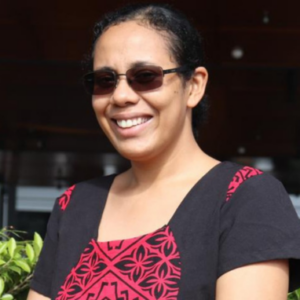
Philomena TatiretaPhilomena Tatireta, who is undertaking a Master of Advanced Health Services Management at Griffith University, joined CheckUP in the later half of 2021 for a placement, working remotely from Papua New Guinea to undertake a project with our outreach team.

“The project I supported with, had an aim to future-proof allied health workforces in rural and remote parts of Queensland,” she said.

“This was to be done through enhanced student outreach placements using a multidisciplined or integrated approach with key stakeholders in areas that need healthcare the most.

“Prior to commencing my Work Integrated Learning placement with CheckUP, I had envisioned gaining invaluable insights and wisdom fon how I can effectively and efficiently serve rural and remote populations better; as a health service manager and with a particular focus on the health project space.

“The Outreach team and my Work Integrated Learning placement supervisor were amazing. Despite the fact that it was difficult for me to do my placement in person, they made the environment nurturing and provided astounding support to help me succeed every step of the way.”

In terms of aspects of the placement that contributed the most to the educational experience, Philomena said,”For me this would pertain to the initiation and planning phases of the project where I was able to refine and apply fully the theory-based knowledge and skills gained during my master’s programme to solve a real-life problem. The most common subject areas that were applied and enhanced during my placement were from the project management course, health economics and health workforce theories.”

CheckUP is appreciative to Philomena for her contributions and congratulates her on being one of only four students in her cohort that received Outstanding Achievement Awards for their Work Integrated Learning placements.

As for the future, Philomena says she plans on transitioning to a higher education program in the field of health economics, “to support my country manage its scarce resources efficiently

2021-2022 Health Workforce Skills and Development Report

The 2021-2022 Health Workforce Skills and Development Report provides an overview of trends in the health industry through analysis of industry intelligence and workforce and training data. Through identifying priority areas for workforce skills and development, this report is intended to be used by government and industry as a resource to inform workforce development and skills investment in the health industry. This report was prepared by CheckUP and was informed by industry consultations undertaken through the ISA for Health program. During the production of this report, the health industry workforce was facing significant impacts as a direct result of the COVID-19 pandemic. This is highlighted in the relevant areas of this report.

This report articulates the central position of the health industry in contributing to the state’s economic growth and provides evidence of its resilience during times of labour market downturns, and fiscal impacts and constraints.

While the industry continues to be a powerhouse for employment and economic growth it is still faced with many challenges. Some of the workforce challenges are shared by other industries such as an ageing workforce, increased competition for labour sources, the need for improved use of skills of the existing workforce, and difficulties in attracting and retaining skilled staff. However, many of the challenges faced by health are unique to the industry itself and can be attributed to the growing demand for services, the changing nature of service model delivery and challenges faced by our rural and remote communities.

The health industry is taking steps to enhance its workforce planning and development capacity. Collaboration is required to position the industry to using the significant social and economic contribution it makes to the state’s prosperity and the real difference it can make to people’s lives and wellbeing.

Read the report