Search

Search

Suggestions

Outreach programs

Membership

Health workforce

Health services

Online training

Provide feedback

Who we are

CheckUP works with partner organisations and health providers to create healthier communities and reduce health inequities through a range of initiatives.

View all

Partner with us

There are so many ways you can support the work of CheckUP and our vision of better health for the people and communities that need it most.

View all

News & publications

Read the latest news and publications from CheckUP.

View all

CheckIN Issue 236 – August 2026

Enjoy the August edition of CheckIN, CheckUP’s member newsletter. Learn about CheckUP’s programs, news and events, plus discover health industry news and more.

Subscribe to our newsletters HERE, to stay up to date with our initiatives, and more.

READ NEWSLETTER

Eye and Ear Surgical Support (EESS) fact sheet

Download the latest Eye and Ear Surgical Support (EESS) fact sheet to learn more about the program.

View fact sheet

Visiting Optometrist Scheme (VOS)

The aim of the Visiting Optometrist Scheme (VOS) is to increase optometry services for people living in regional, rural, and remote locations (MM2 – MM7 locations are eligible).

In recognition of the need for culturally sensitive services for Aboriginal and Torres Strait Islander people, VOS funded outreach services may be provided in major cities (MM1), provided that the service is delivered in an Aboriginal Medical Service, Aboriginal Community Controlled Health Organisation or other culturally safe/appropriate host organisation.

The VOS is made up of an Indigenous and non-Indigenous component with the Indigenous component making up 40 per cent of the total annual funding allocation in each jurisdiction.

VOS is managed by CheckUP as the jurisdictional fundholder of the Outreach programs in Queensland.

CheckUP works with our Outreach service providers and local communities to coordinate and integrate optometry and other eye health services to best meet the needs of the patient.

Aims

The program’s objective is to improve the eye health of people in regional, rural, and remote locations by:

  • increasing optometry services in areas of identified need
  • improving the coordination and integration of those eye health services and the quality of ongoing patient care
  • enhancing communication between visiting optometrists, local health providers and other visiting health professionals.

Funding eligibility

The program supports outreach services provided by optometrists.

Reimbursement

Through the program, reimbursement may be available for:

  • coordination and administration support
  • travel expenses
  • cultural awareness and safety training for participating service providers
  • upskilling local health professionals
  • professional support associated with outreach services.

View factsheet

Coordination of Indigenous Eye Health flyer

Download the fact sheet to learn more about the CIEH program.

READ MORE

CheckIN Issue 235 – July 2026

Enjoy the July edition of CheckIN, CheckUP’s member newsletter. Read it to learn about CheckUP’s programs, news and events, plus discover health industry news and more.

Subscribe to our newsletters HERE, to stay up to date with our initiatives, and more.

READ NEWSLETTER

First Nations Health Outreach Service (FNHOS) fact sheet

Download the latest First Nations Health Outreach Service (FNHOS) fact sheet to learn more about the program.

The First Nations Health Outreach Service (FNHOS) supports the continuation and consolidation of the Medical Outreach Indigenous Chronic Disease Program (MOICDP) and Healthy Ears – Better Hearing Better Listening (HEBHBL) into a single FNHOS program. The intended outcomes include, but are not limited to:
• new and expanded existing services that primarily focus on management of chronic and ear diseases as well as ophthalmology services for Aboriginal and Torres Strait Islander people
• improved collaboration between local and visiting health professionals
• improved capability of local health professionals through upskilling and training
• improved culturally appropriate care.

The FNHOS is managed by CheckUP as the jurisdictional fundholder of the Outreach programs in Queensland.

View fact sheet

Rural Primary Health Service

The aim of the Rural Primary Health Service (RPHS) is to increase effective management of chronic conditions or chronic condition risks in regional and remote communities. This is accomplished by providing additional allied health sessions to eligible patients at no cost.

Objectives

The program’s objectives are to:
• increase the number of people who are effectively managing their chronic condition (or chronic condition risk) in underserviced regional or remote communities.
• increase equitable access to sustainable primary healthcare services in underserviced regional or remote communities

Patient eligibility

People eligible to be referred into the RPHS program must have:
– chronic condition or
– a chronic condition risk.

For people with a chronic condition, a GP will need to refer into the program by determining whether a person is eligible for Chronic Disease Management services. People on a care plan are eligible to receive two additional sessions or unlimited group sessions under the RPHS program. People at risk of a chronic condition are eligible for 2 sessions or unlimited group sessions. The service they access must correspond to the identified risk factor/s.

Download the Rural Primary Health Service (RPHS) fact sheet to learn more about the project.

Download factsheet

RPHS referral form

Download the RPHS referral form.

Download referral form

RPHS consumer flyer

Read how the Rural Primary Health Service can help rural patients stay healthy, locally.

Download flyer

First Nations students participate in six-day healthcare immersion tour

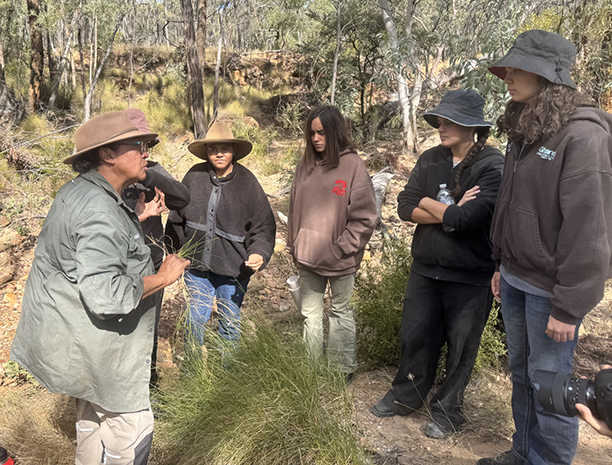
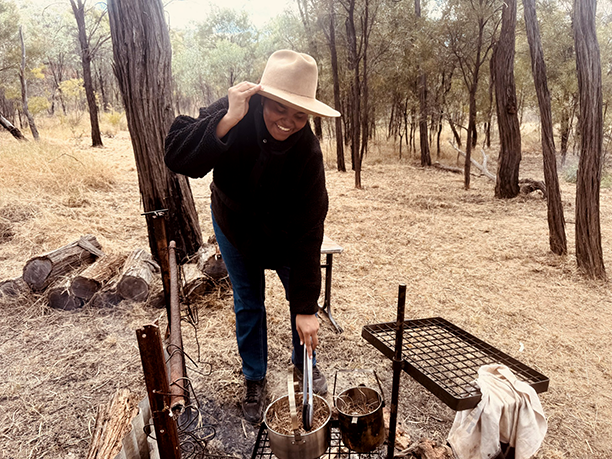
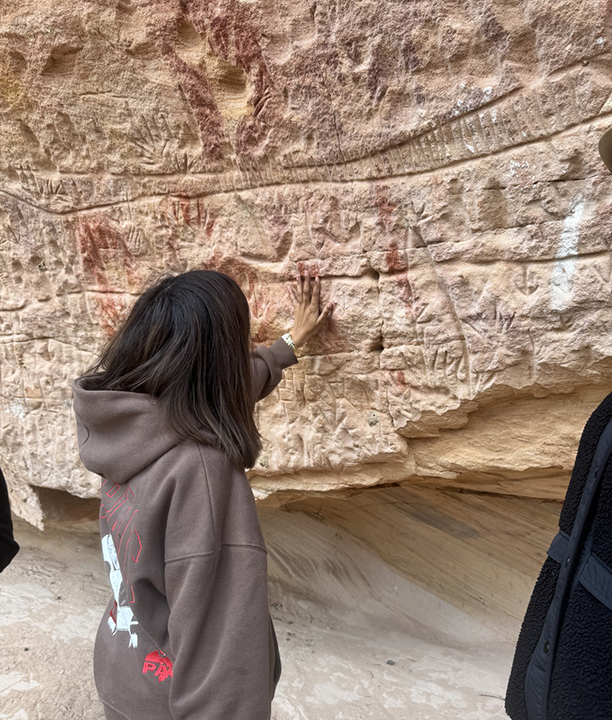
Recently,  First Nations students from Heatley Secondary College participated in a six-day healthcare immersion tour designed to provide valuable exposure to regional and rural healthcare services, remote communities, and culturally informed on-Country learning experiences.

Travelling west from Townsville through Charters Towers, Hughenden, Winton, and Longreach, students explored a range of healthcare settings before taking part in a cultural immersion program at Gracevale Stationon Iningai Country in Turraburra.

During their time on Country, students gained a deeper understanding of the history of the Iningai Nation, the impact of colonial settlement across the region, and the cultural significance of Turraburra today. They visited important cultural sites, including the Dinosaur Pathway, the Sacred Waterhole rehabilitation project, and the Seven Sisters Story Wall. Students also participated in traditional bush medicine activities and learned about native lemongrass harvesting, providing a meaningful connection to Country and First Nations knowledge systems.

The Gateway to Industry Schools Program – Health, appreciates the generous financial support of On Country and Health Workforce Queensland that enabled the students to participate in this life-changing experience.

The success of the tour was also made possible through the extraordinary generosity of the regional communities along the journey. Healthcare providers generously donated their time to host tours of their facilities and share insights into careers in health. Local attractions provided complimentary entry, businesses offered discounted meals, and Winton Shire Council kindly provided complimentary accommodation for the group’s stay in Winton.

Truly an amazing experience for our Townsville students.

Learn more about Gateway

Looking beyond the sector: Why diverse experience strengthens workforce capability

by Carissa McAllister, First Nations Industry Workforce Advisor (Health and Social Assistance)
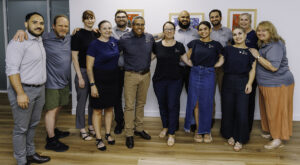
When organisations think about workforce development, there can be a tendency to look within their own sector and what they know for solutions. However, some of the most valuable workforce insights come from experience gained across different industries, regions, and organisational environments.

To address workforce challenges, organisations should consider broadening their recruitment lens and looking beyond their own sector for talent. Candidates who share the organisation’s values and purpose often bring highly transferable capabilities such as leadership, problem-solving, relationship building, and strategic thinking, along with fresh perspectives and innovative approaches to workforce development.

For Rosalyn Mann, Workforce Sustainability Lead at Wakai Waian Healing, a growing organisation delivering culturally grounded, trauma-informed mental health services across Queensland, a diverse career journey has shaped her approach to workforce strategy, leadership, and organisational capability. Her experience across multiple industries has provided unique insights into building sustainable workforces, developing people, and creating organisations where both employees and communities can thrive.

“I have spent my career moving across industries, regions and organisational sizes, and that journey has shaped the way I think about people, capability and workforce strategy,” says Rosalyn.

“I started in universities and community organisations, moved through major infrastructure and natural resource projects, stepped into mining and resources with some of Australia’s largest employers, and later supported small Indigenous owned businesses and local government. Each sector taught me something different about how people work, what they need to thrive, and how organisations grow when they invest in their workforce.”

Throughout her career, Rosalyn has observed that while industries may differ, the foundations of workforce success remain remarkably consistent.

“Working in multinationals gave me a deep understanding of structure, governance, leadership development and large-scale workforce systems. Government roles taught me the importance of transparency, community engagement and service delivery. Small business sharpened my ability to be practical, agile and hands on. Across all of it, I learned how to build processes that actually work for people, not just for policy documents.”

Now working in the health sector, Rosalyn draws on lessons from every stage of her career.

“Coming into the health sector, I brought that full breadth of experience with me. I may be new to health, but I am not new to the workforce. The fundamentals of building capability, supporting people, strengthening culture and planning for the future are universal.”

She believes one of the greatest benefits of working across sectors is the ability to identify opportunities and solutions that may otherwise go unnoticed.

“In fact, having worked across so many sectors, I can see opportunities that others might miss. I understand how to translate good practice from one industry into another, how to design systems that fit the organisation rather than forcing the organisation to fit the system, and how to think creatively when the usual solutions are not enough.”

Rosalyn is also a strong advocate for broadening recruitment approaches and recognising the value of transferable skills.

“One of the messages I share often is that organisations should not limit themselves to recruiting only from within the health sector. Functional knowledge can be learned. What matters is the ability to lead people, build systems, understand behaviour, manage change and think strategically.”

“When you bring in people with diverse sector backgrounds, you also bring in new ways of thinking, new problem-solving approaches and a broader understanding of how different industries tackle similar challenges.”

For Rosalyn, workforce capability is built through diversity of experience, perspectives, and ideas.

“My career has shown me that workforce capability is built through diversity of experience, not sameness. And in this role, I draw on every part of my background, from mining to government to community relations to small business, to help build a strong, sustainable and people-centred workforce for the future.”

Are you looking for tailored business support at no cost? We can help you.

Contact Carissa McAllister
– First Nations Industry Workforce Advisor
Contact
View Strong Futures Start Here
– How to start workforce planning for First Nations health and community services.
 
Download
Visit the Industry Workforce Advisors – First Nations web page to learn more
Go there

Discover how CheckUP can support your workforce solutions by visiting the link below.

The Industry Workforce Advisor Program is proudly funded and supported by the Queensland Government.

Industry Workforce Advisors

CheckIN Issue 234 – June 2026

Enjoy the June edition of CheckIN, CheckUP’s member newsletter. Read it to learn about CheckUP’s programs, news and events, plus discover health industry news and more.

Subscribe to our newsletters HERE, to stay up to date with our initiatives, and more.

READ NEWSLETTER